
You Should Probably Buy One - Primary Arms 3x Micro Prism ACSS 5.56 Raptor
Updated
45 months ago
Good morning everyone, hope you’re all having a wonderful day today. Today we’re gonna be looking at the very hot, very sleek, Primary Arms micro 3xprism, but before we get into the video, if you don’t know, gun.deals is a website that provides you with links to some of the best products and prices within the industry. So, if you like saving money on cool stuff, go ahead and check them out. Once again, that is gun.deals.
Now, while you’re here, you might as well like, share and subscribe, as all that sort of stuff is free and does help us out quite a bit. On top of that, go ahead and comment anything down below.
Now, full disclosure on the Primary Arms 3x micro prism is that I did pay my own money for, however, I am a dealer for Primary Arms optics, so I did pay reduced price for it. On top of that, I do have a relationship with Primary Arms in general, as the 2.5-10 GLX behind me was sent out by them for review, so I do have a relationship with theme and I did pay my own money for this optic, however, again, at a dealer cost for this optic.
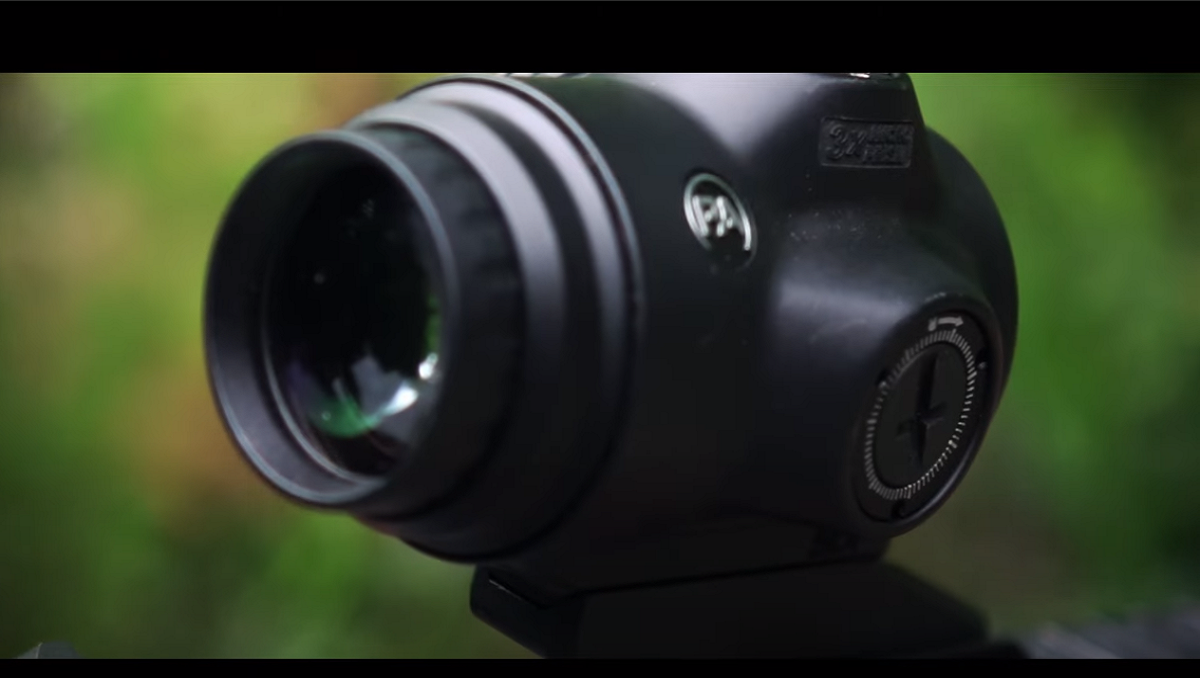
Now, with all of that out of the way, we get into the specifics on the Primary Arms 3x micro prism. Now, most importantly on the micro prism is probably gonna be size and weight.
Wikiarms.com Search Engine Results
Want to see your products here? Click this
link.
 Powered by Wikiarms.com
Now, size is a little bit interesting on this guy because, of course, it does come with multiple riser options for multiple heights, so you have everything from low mounts, which is like a 1.1, all the way up to like a 1.93, and then they also make aftermarket risers for them, and I believe they’re also compatible with ACOG mounts as well, so there are a lot of different mounting options to adjust your height.
Now, at its standard height, I believe this is a 1.53 at its standard height, it comes in at a whopping 7.9 ounces or 8.6 ounces, something like that. So, overall, it’s not all that much bigger or heavier than like most of your red dots, maybe a few ounces heavier, but definitely not that much larger than like your standard micro red dots.
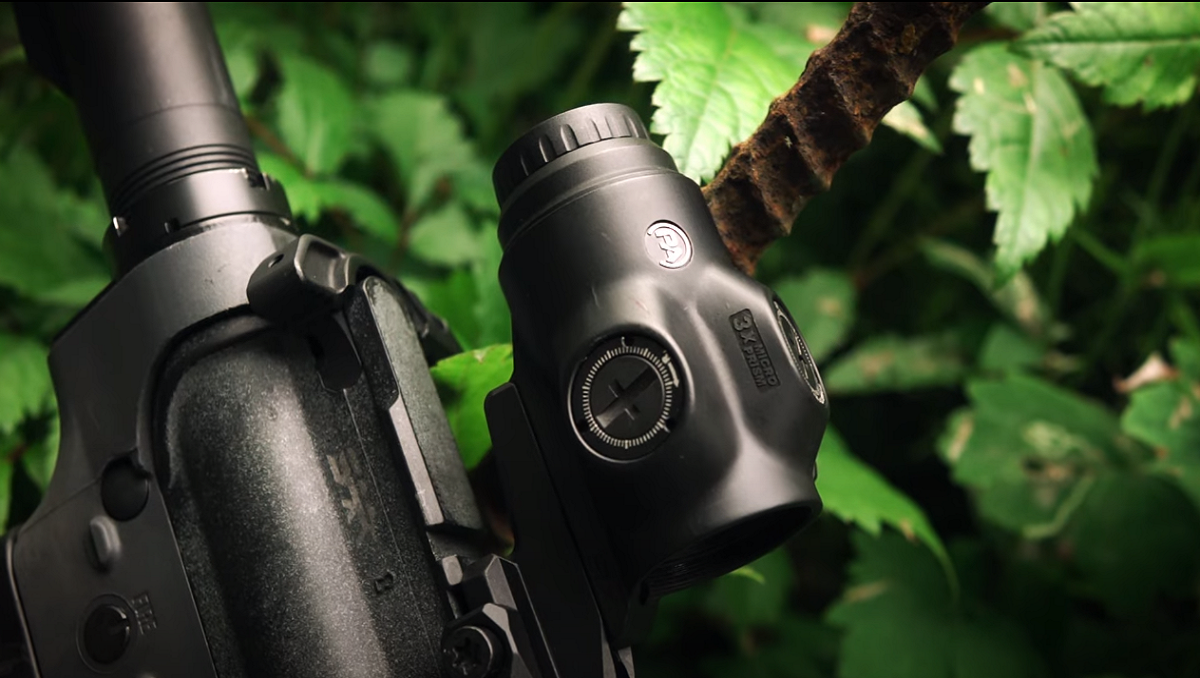
As you can probably tell, we do have exposed windage and elevation. Now, on the 1x micro prism they were 1MOA clicks, and I know some people didn’t like that because that was just a little bit too imprecise, however, on this 3x micro prism they’re actually quarter MOA clicks, which is a little more precise than most people will need and it’s definitely fine, I would rather have more precision than less precision, but, again, it is just funny to note that on the 3x they’re quarter MOA and then on the 1x they are 1MOA, which personally they are both fine whichever way you go, especially for their intended use case application, though, again, you can refine your zero quite well on the 3x micro prism.
Now, on the left hand side here we have our illumination dial, which is a rotary knob, which a lot of people do like on top of that, it also doubles as our housing for our 2032 battery.
Now, very nice on all of the new Primary Arms optics that I’ve seen is they all have their auto-life technology, which means that when it’s at rest it will turn off and then, soon as you pick it up and move it around, it will automatically turn back on.
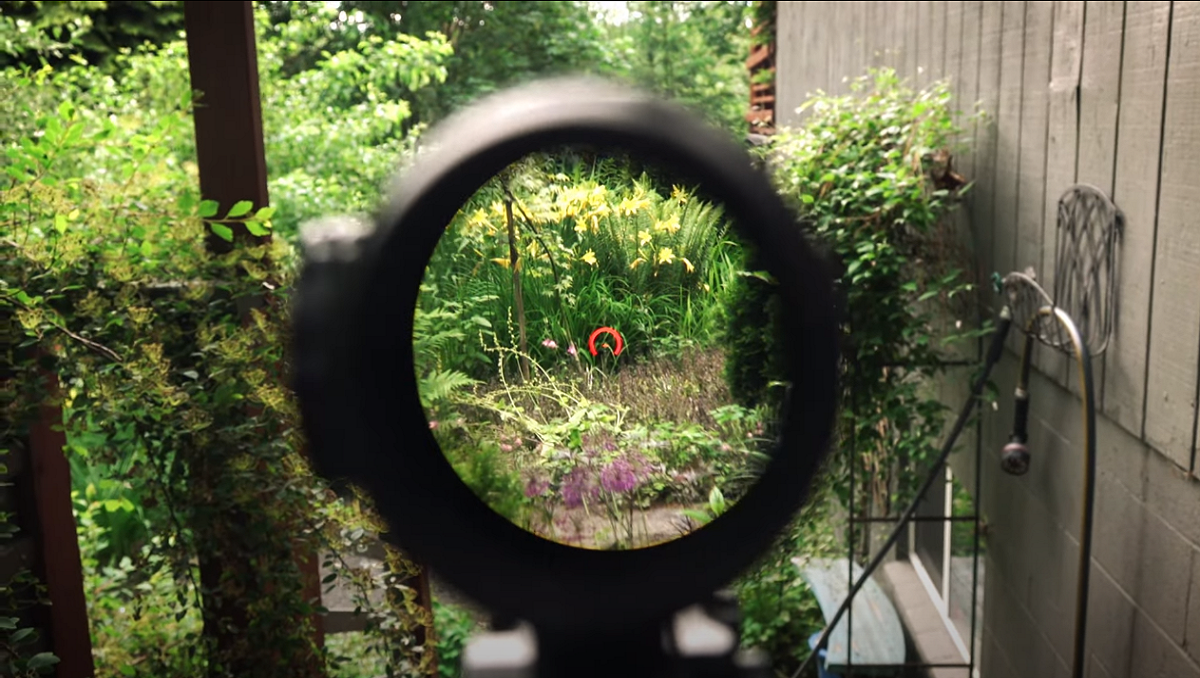
Also, very nice about this model, that is the red with the 556 Raptor reticle, it gets very, very bright. I’ll go ahead and roll some video here, but on its max setting, which is I believe you have three night vision settings and then ten daylight bright settings or ted daylight settings. On the 13th dial it is very, very bright. Now, it’s not quite as bright as like red dot, but even in full daylight you can still see the red haze around the reticle, which is a nice feature to have.
Wikiarms.com Search Engine Results
Want to see your products here? Click this
link.
Powered by Wikiarms.com
Now, you don’t need it because it is an extra reticle, but for me and a lot of other people it is just a preference to have a daylight bright or at least daylight tinted reticle to help cut through some contrast, dark areas, green backgrounds, dark backgrounds, what have you.
Now, moving back from there, the last thing to note on the diminutive optic body is going to be the diopter. Now, the diopter is there to adjust the reticle to your eyes, everybody’s eyes are a little bit different. I personally have a very good vision, especially in my right eye, I have 2010 vision or a little bit better than 2010 vision in my right eye. For you it might be a little bit different, so you’re gonna need to adjust the diopter to clarify the reticle for your eyes.
Now, getting into the optic mount itself, if you see my video on the Primary Arms 1x prism, then you’re gonna be very familiar with this. Basically, it has two very nice crossbolts on the bottom, plus two integrated lugs, so you have substantial crossbolts over a large clamping area to apply a large amount of clamping force. Overall, it holds very, very well to your rail.
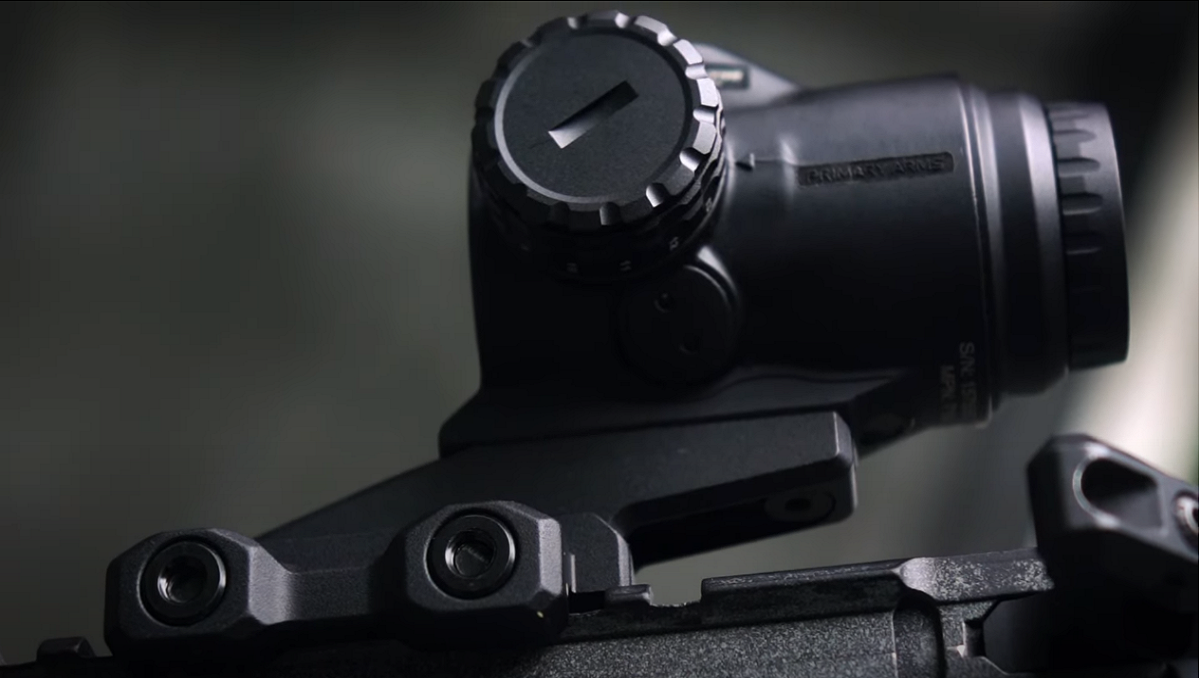
Now, on top of that, this one comes with just the included Cantilever mount and, again, it comes with other spacers as well, and you can add or subtract as necessary for your specific platform and desired height. As far as the mount design goes overall I like it quite a bit.
Wikiarms.com Search Engine Results
Want to see your products here? Click this
link.
See more results
for Cantilever Mount on Wikiarms.com
Powered by Wikiarms.com
The only thing that is missing for me a little bit is like some sort of integrated recoil lug on the spacer sections because, again, what you have here on the mount is very good, the base mount itself, but then it just bolts into the spacer and then bolts into the body of the optic and there’s not like a recoil lug in there to really lock it down. That’s the only thing that I would personally change on it, but, again, these are also compatible with ACOG mounts as well, so you do have a very wide variety of mounts to choose from. Not that I have noticed any shift in zero from my time with the optic, but, again, it’s just one of those sort of preventative things that I would like to see for a little bit more solid lock up.
Wikiarms.com Search Engine Results
Want to see your products here? Click this
link.
Powered by Wikiarms.com
Now, moving on from there we can go ahead and talk about the eye relief, the eye box, glass quality and reticle.
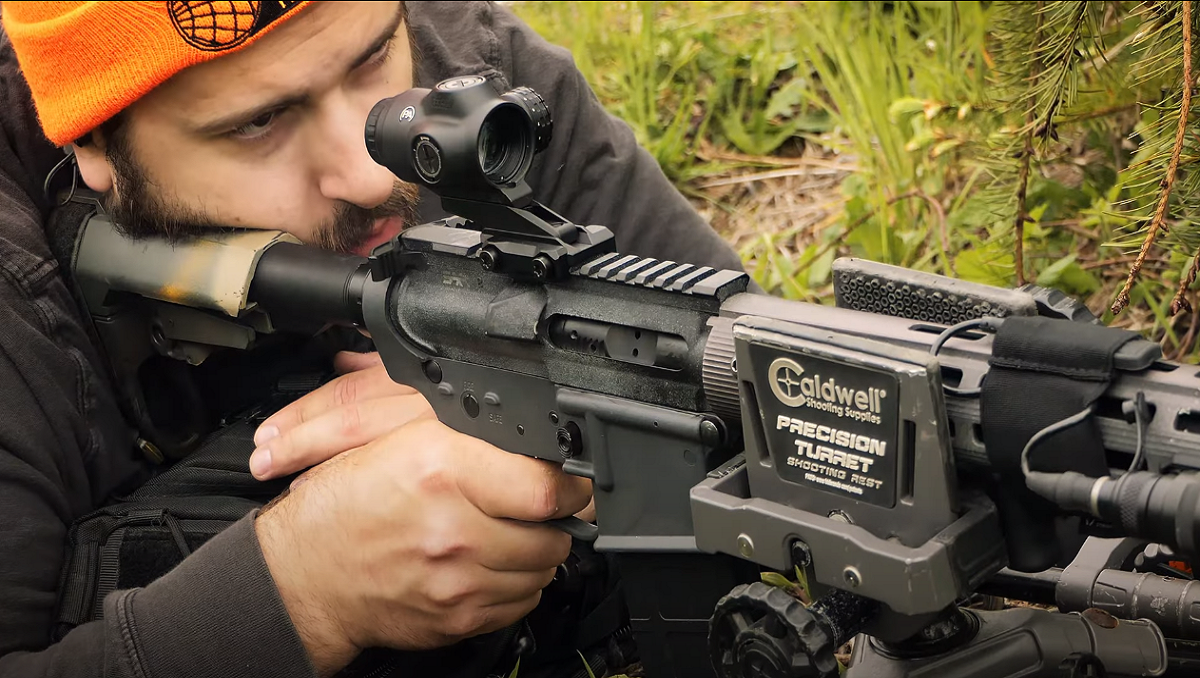
Now, starting off with the eye relief, they quote it as 2.7 inches, and they are being a little bit generous on their side, I would say, so they’re actually giving you a little bit more than that. So, the optimum eye relief is probably at about that 2.7 ish inch range, you can get, of course, a little bit closer and you can actually back it up a little bit and still have good vision through it.
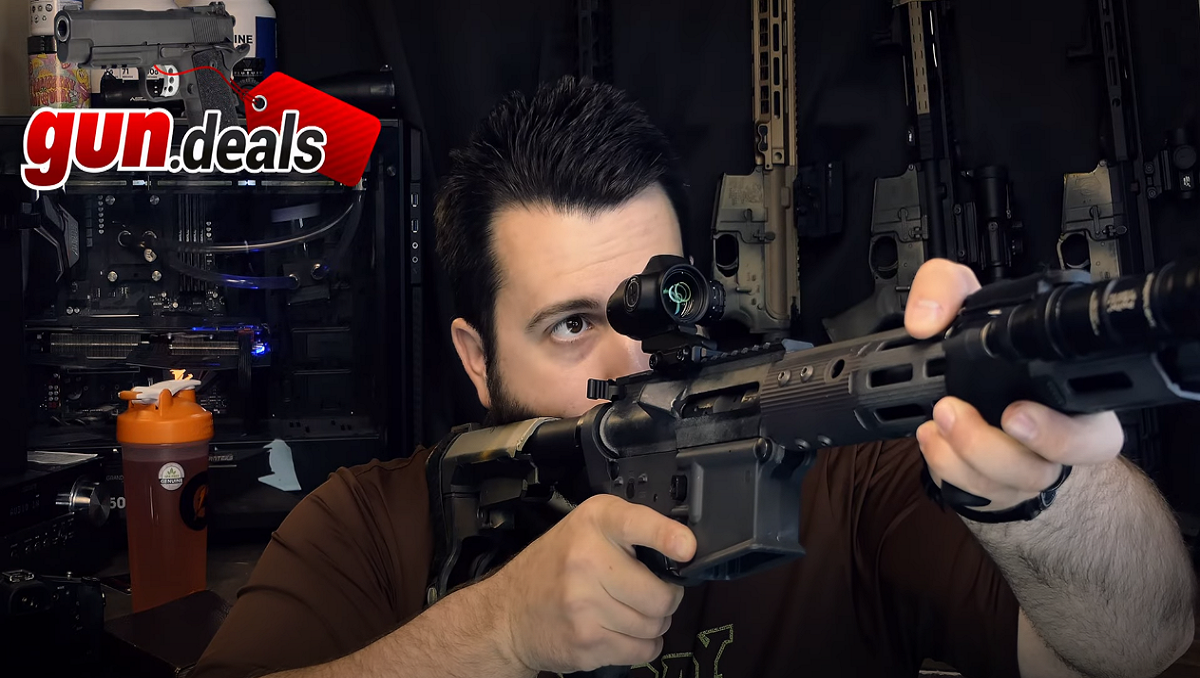
As far as 3x prism goes, it’s actually fairly forgiving in terms of its eye relief and eye box, so, again, at that optimum range you can move your head up, down, left, right, just a little bit before you start to get that scope shadow. While it’s not as near as nice as like an LPVO at 1x, again, for 3x prism, especially something that is this small, it actually does have a fairly forgiving eye relief and eye box, meaning that it is usable on a lot of different platforms, you don’t need slam your stock all the way in like you would need to on some other prism that we’ve reviewed recently.
Now, again, having a more forgiving eye relief and eye box is very helpful when shooting from unconventional positions, so, now, if you’re just standing there, not moving whatsoever, it doesn’t really matter too much because you can just always have your head in the optimum position, but, again, if you’re shooting from barricades, underneath the car, what have you, having that more forgiving eye box, eye relief, is a large advantage.
Now, getting into the actual optical quality, the actual glass quality that I can perceive with my eyes on the 3x micro prism, it’s not necessarily its shining feature no pun intended, so while the glass quality is good, it’s bright enough, it’s crisp enough, you can definitely use it out to extended distances, it is a little bit softer, a little bit less crisp, a little bit less bright than other optics, other 3x prisms in this price category.
To compare it briefly to some other prisms in the same general price category, the Swampfox Trihawk, the Primary Arms 3x macro prism, the full-size prism and the Vortex 5x prism, that I personally have two of them behind me, one on the shelf over there. In terms of glass quality, the best, the brightest, the crispest is going to be the Swampfox Trihawk, that 3x prism, though, again, remember it is double the size and weight of this optic. The next would be the Vortex 5x HD, which is also behind me, and then you have the Primary Arms 3x full-size, and then below that, I would say here is the Primary Arms 3x micro.
Wikiarms.com Search Engine Results
Want to see your products here? Click this
link.
Powered by Wikiarms.com
Wikiarms.com Search Engine Results
Want to see your products here? Click this
link.
Powered by Wikiarms.com
The main downside here, well, again, I don’t want to overstate it like the glass is terrible, it’s definitely fine, definitely usable, it’s on par with like most budget LPVO’s I would say, but it’s not gonna be as crisp or as bright as other 3x prisms on the market.
Now, probably some of that has to do with the fact that there’s just not a lot of glass here, there’s not a lot of glass, front pane glass, the objective lens, whatever it is, to capture all of that light to then transmit it through the body, so you do have a little bit less, not necessarily light transmission, but less light capturing ability, so it’s not quite as bright, it’s not quite as crisp as other 3x prisms on the market, not saying that it’s bad, it is just a slight below other, again, other competitive offerings.
Now, something that those competitive offerings don’t have compared to the 3x micro prism from Primary Arms is, of course, the advantage of being very small and very lightweight.
Now, the last thing to talk about on the 3x micro prism, before we go into the reticle, is going to be field of view, and the field of view is actually very good. So, the field of view at 3x, because, of course, this is a fixed magnification prism, is 38 feet. Now, 38 feet is going to be similar to a 1x LPVO at about 110 feet, let’s say, so 110 feet on a 1x LPVO or on the 1x an LPVO would be very good in my opinion, in terms of field of view, so this 3x prism also has a very good field of view.
Now, it’s not the best I terms of field of view, to quickly bring up the Swampfox Trihawk again, which is, again, remember, double the size and double the weight, quite literally double the weight. That has the field of view of 52 feet at 100 yards, which is immense, that is the largest field of view out of any optic that I know off the top my head, again, has an absolutely monstrous field of view.
Getting into the reticle, now, on the ACSS, this is the Raptor 556, slash 308, slash 545 by 39, I believe, it’s gonna be very similar for all of those calibers, depending on your barrel length and ammunition selection, of course.
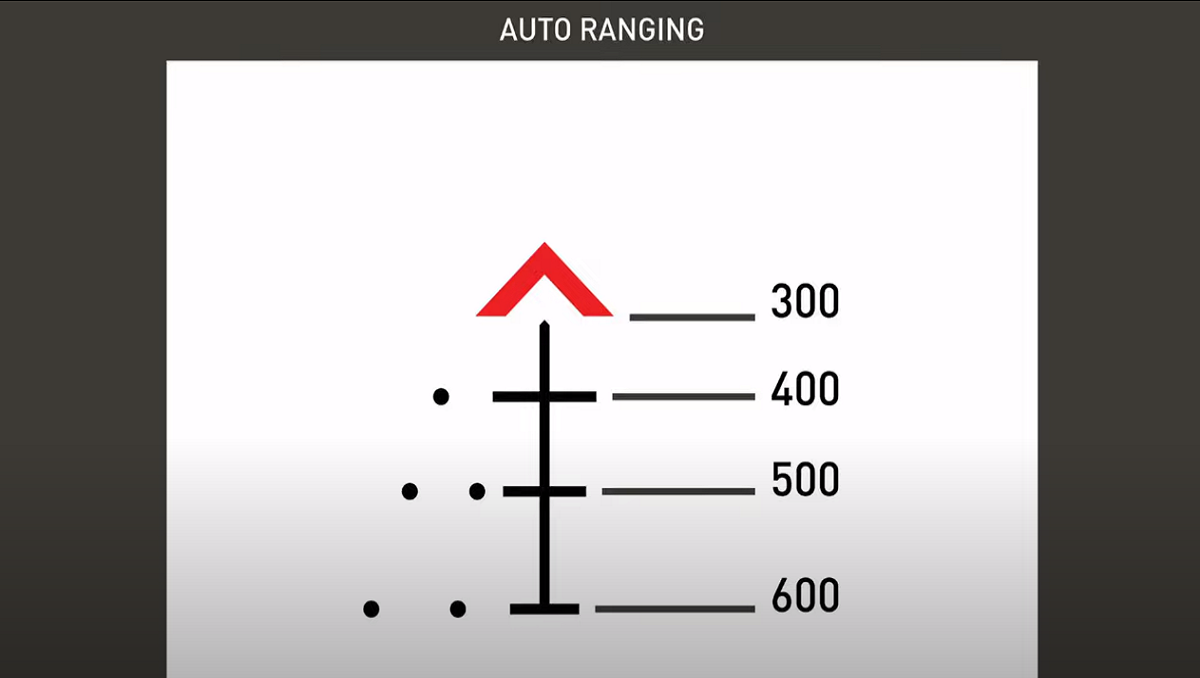
In the center of the reticle we, of course, have our tried and true ACSS chevron. Now, the chevron doubles as a fine refined point of aim, and also a fast acquisition as well as a little bit of a BDC, so in the center, if you use the point of the chevron, that should be where you zero the optic, I believe on this optic it is 50 slash 200, and then the bottom of the chevron is 300 yards and then you have your 4, 5 and 600 yards holds underneath it.
Now, on the outside of the chevron we, of course, have our horseshoe section, which will help us with fast acquisition as well as bracketing targets, I believe the shoulder width is at 100 yards and then if it’s half 200 yards, a quarter 400 yards, so on and so forth, so there is, again, some, not only some fast acquisition features built in there, but also some auto-ranging as well.
Now, getting into the actual BDC section we, of course, have our stadia lines for 4, 5 and 600 yards. On top of that, we also have 5 and 10-mile on our wind holds for, again, 4, 5 and 600 yards. Wind holds on a 556, especially just shooting 55 or 62 grain ammunition, is gonna be very important.
On top of that, the center stadia lines also double as auto-ranging features as well, those should measure up fairly close to the average human shoulders at those appropriate distances, so if you put it on them at 400 yards, and it fills up their shoulders, that’s 400, 500, 600, so on and so forth.
Now, when it comes to performance and actually using this scope in a wide variety of circumstances, I am very happy to say that it was actually extremely usable. In the fast shooting section in the, you know, inside of 100 yards, it was very fast, very easy to acquire targets, even to transition between targets inside of like 5 to 15 yards, if you will. So, within that fast shooting envelope it performed very well, it has a good eye relief, good eye box, very good field of view combined with a good reticle that provides fast acquisition up close. It was very easy to transition between targets, you know, inside of, again, that 50 to 50-yard range, picking up targets was quite easy, again, while the glass is not the best in class, it is still fine, it still definitely gets the job done, and then, of course, when you’re stepping iy out to mid-range distances, anywhere between 3 and 500 yards, it also performed quite well.
The limiting factor for this optic at 500 yards, or 400 yards, even as well, is gonna be this cac 125 upper, this is actually hops old upper and it is mostly terrible, but we’ll get into that at a future point in time.
Now, even though this is a true micro 3x prism, at the end of the day it is one of the more usable 3x prisms on the market, even though it is very small, it has a combination of decent eye relief, good eye box, big field of view, good reticle, that makes it very usable. On top of that, there’s really no size or weight penalty, you don’t have to cram your head all the way forward to get a good eye relief on the optic, so at the end of the day, even though there are some downsides to it, it’s not necessarily the greatest glass on the planet, so, again, in terms of functionality this actually performs towards the top of the 3x prism stack.

Now, at the end of the day it is still a 3x micro prism, even though it is a very usable micro prism, so it’s not going to be as versatile as a lot of other optics on the market, especially when we’re talking about LPVO’s or, you know, sort of mid-range magnification optics. It is definitely usable in a wide variety of circumstances, but personally, I don’t think 3x prisms are for everyone, however, if you’re looking for a 3x prism, this is going to be a very good one to look for, especially considering that they come in, I believe, retail right now, is like 320, which is not terribly expensive, that’s not quite the cheapest 3x prism on the market, but it’s definitely towards the bottom of that stack, you can definitely spend way more money and get way less performance on a 3x prism, and, again, it is very usable, but it’s not necessarily going to be for everyone just by virtue of being a 3x prism.

So, at the end of the day, guys, I do think that the Primary Arms 3x micro prism is a very good prism optic with a very little to complain about, again, you’re just gonna have to decide whether you need a 3x prism, and if you have an application that needs an optic like this, again, very versatile for a 3x prism, but, again, at the end of the day it is still a 3x prism, no matter how small and lightweight it is.
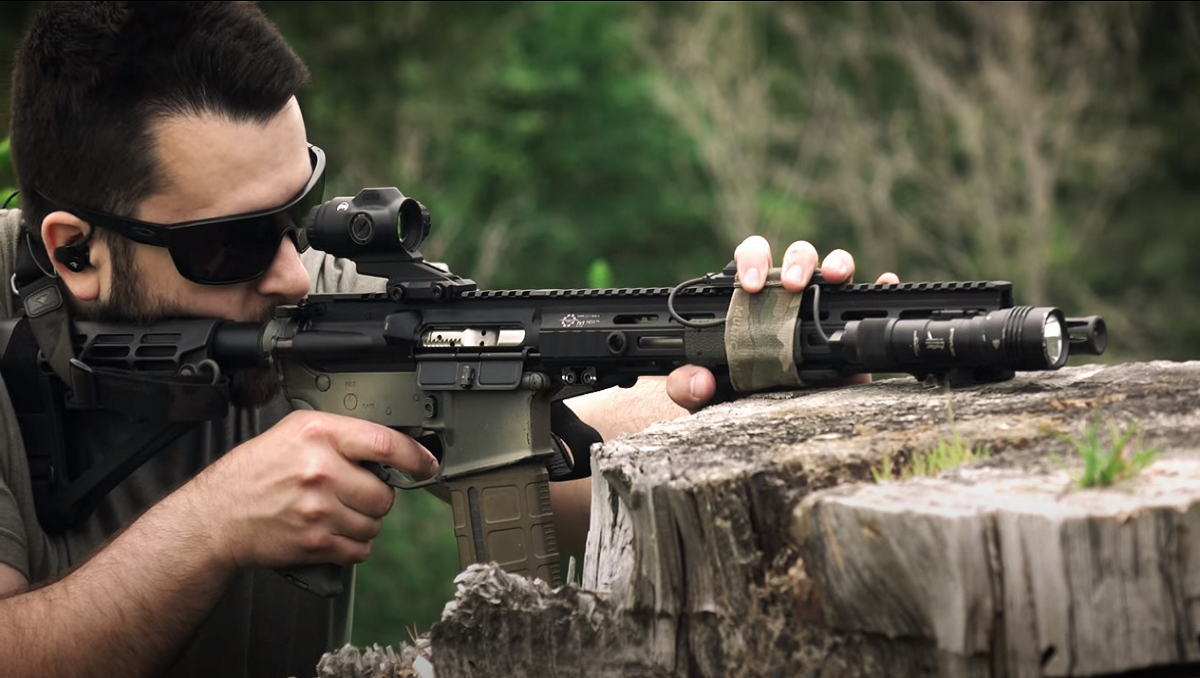
Now, with all of that out of the way, guys, I hope you all enjoyed, let me know what you guys think of the 3x micro prism from Primary Arms in comments down below, and I will see you guys in the next one.
Peace off!