
See more results
for Griffin Armament MK1 on Wikiarms.com
Top Tier 11.5 - Griffin Armament MK1
Updated
34 months ago
Good morning, everyone, this is John with gun.deals, and today we're going to be taking a look at the premium Griffin Armament MK1 upper receiver.
What do I mean by premium? This upper receiver costs about 1300 dollars for just the upper receiver by itself. Keep in mind, Griffin Armament is one of the few companies selling a complete upper receiver I'll say, because it does actually include their iron sights as well, but the iron sights are pretty fantastic and probably a couple hundred dollars worth of value, so it's in the ballpark of some of the more expensive upper receivers.
Wikiarms.com Search Engine Results
Want to see your products here? Click this
link.
 Powered by Wikiarms.com
Full disclosure, Griffin Armament did send this out to me for review for free so I did not pay for this upper receiver whatsoever. They also sent me out their hub adapter for their silencer mounting system, which the YHM Turbo K is currently hooked up to, so we'll go ahead and get into all that.
Getting into just what is the Griffin Armament Mark 1, this one that we have here, this is the 11.5, .223 Wylde, they do sell it in different lengths and I believe 300 Blackout as well, but this is for the most part what you're going to be getting with a few different length options
Starting off with the barrel, the barrel is going to be one of my main points of contentions with the build, the barrel is a 11.5, .223 Wylde, 416R stainless steel barrel, and it is a heavy SOCOM profile barrel or an M4A1 profile, which is one step underneath a heavy barrel. They call their barrels the HEDP, the high endurance dual purpose system, however, I would call it the MELP, the medium endurance limited purpose barrel. The reason why I am not personally as kin on their barrel system as they are is because I think the cons outweigh the pros.

Getting into the idea behind an 11.5 heavy barrel, 416R stainless steel, 416R stainless steel generally speaking has very good mechanical properties for accuracy, you combine that with a heavy barrel and that's going to give you reduced variations, reduced harmonics in the barrel, so on and so forth, to in theory give you very good accuracy over a wide variety of loads. So, in theory you should have a very smooth accuracy curve between different manufacturers, grain, weights, so on and so forth.
Their dual purpose is that they're also black nitriting it, which is going to help to increase the barrel life because it is very hard, very heat resistant, very lubricious, so on and so forth, and black nitride is a very good coating. However, the downside of 416r stainless steel is that it has about half the barrel life of the appropriate 4140 or 4150 barrel steel. It is definitely on the side of accuracy and you can try to extend that 416R stainless steel barrel life with nitride. The barrel itself is also 1-8 twist, which is fantastic as well as 5R rifled, which in theory can help to extend that barrel life, but we're still never goingto be reaching a properly 4140/4150 barrel steel.
The weight on the barrel I believe, with the gas block installed, is like 26.5 ounces, something like that, which is going to be anywhere from 4-6 ounces heavier than a comparable standard profile on an 11.5 style barrel like the Geissele taper profile, which is in the same ballpark in terms of price. So, the first part of that HEDP barrel system, that high endurance portion, that might be correct when you're comparing it to other 416R stainless steel barrels, however, it's not going to be true when you compare it to any appropriately manufactured 4140 or 4150 barrels.

Maybe that trade-off is worth it to you for that additional accuracy because it is 416R stainless steel combined with a heavy barrel profile, so it should in theory give you very good mechanical accuracy. Unfortunately, we didn't really see that in our testing so at this point in time we will continue to test it and get much higher round counts on it in the future, but at this point it's not particularly accurate compared to other lighter profile barrels and 4140/4150 profile barrels, it's more expensive and it's less durable. I think they could retain 99% of the accuracy and about double their barrel life just by swapping to a more appropriate barrel steel because they do rate these as duty grade, hard use, super durable systems, but that 416R stainless steel, for me personally, doesn't make any sense and when we get into accuracy later on you'll see that it does not compare favorably to other lighter, cheaper 4140/4150 barrels on the market that are also going to be more durable as well.
Getting into how the barrel is actually put together, the specs on it are pretty fantastic, you have 5R rifling, 1-8 twist, something else that should also allow you to have a very soft accuracy curve over a wide variety of loads, in general, most people think that 1-8 is the best overall twist rate for a 556-223 Wylde chambering because in theory it should give you a very good accuracy curve.
Getting into the gas block installation, this is one of the very few barrels that is actually double dimpled, and then, on top of that, it is also pinned to the barrel itself, so as far as gas block installation goes, absolutely fantastic, no complaints whatsoever. The second thing that I do have to praise them for is the gassing on the barrel, out-of-the- box it is one of the softest 11.5 uppers on the market. It is a little bit on the heavy side because of that heavy barrel, but even so with a 62 grain M8 55 it was ejecting about 330 right out of the box, which is fantastic. With the suppressor on, with some of the other stuff that we're going through later on, it also performs very well suppressed. They claim that the gas ports are optimized for suppressed and unsuppressed shooting and I absolutely agree with them. The gassing on the barrel is fantastic, the gas block installation is bombproof, no issues there.

Getting into the rail system, the rail system is another area where they did a really good job in my opinion, it is an M-LOK rail, 3, 6, and 9 o'clock, and they're using an aluminum barrel nut, but with that aluminum barrel nut is coming in at under 10 ounces installed.
The mounting mechanism to the barrel nut itself, you have four steel clamps on the bottom, which is not my favorite as far as installation goes, and if it were just that I would not be very happy with the rail whatsoever. However, there is a steel bolt that actually goes directly into the barrel nut through the hand guard, so for the hand guard, to shift the barrel nut itself, would also need to shift, which would be an insane amount of force on the rail itself. The rail is I believe on this 10.5” long because it comes right out to the edge of the muzzle, looks very good and it is extremely lightweight.
M-LOK at the 3, 6, and 9, that's enough M-LOK for me personally. The reason that a lot of companies don't do full seven-sided M-LOK is you actually need more material to support that M-LOK, so having seven-sided M-LOK is actually heavier than having the vents at the intermediate positions.
With that being said, what they have done is the hand guard itself actually has rails running on the inside all the way down with one of their custom extrusions, so you actually have essentially reinforcement ridges on the inside to enhance the rigidity of the rails. So, the lockup with it being bolted directly to the barrel nut, I think that is about the best way to go personally, it's also very simple, very lightweight, the rail itself is slim, has all the M-LOK that I personally need and with those reinforcement ridges all the way down on the inside is also extremely rigid. As far as the rail goes, it's lightweight, it's strong, the mounting mechanism is very good, has most the M-LOK full length Picatinny, I don't have any problems with the hand guard either, and it's in that premium price category for reason.
Another very nice thing for me personally is these three rail panels come pre-installed from the factory, so you do not need to set them up whatsoever, and this is generally how I run most of my shorter ARs anywhere, some sort of hand stop, angled foregrip, something like that. The rail panels themselves are M-LOK, so they're actually bolted to the hand guard itself, on top of that, they have these very nice scales to give you some extra grip, much more than just the slick anodized aluminum of the hand guard. One thing about running shorty ARs, especially suppressed, especially in the heat, is that they do get hot very quickly, so having these rail panels installed and ready to go is going to help protect your hands plus gloves, meaning you can use it for a lot longer period of time and not burn yourself.
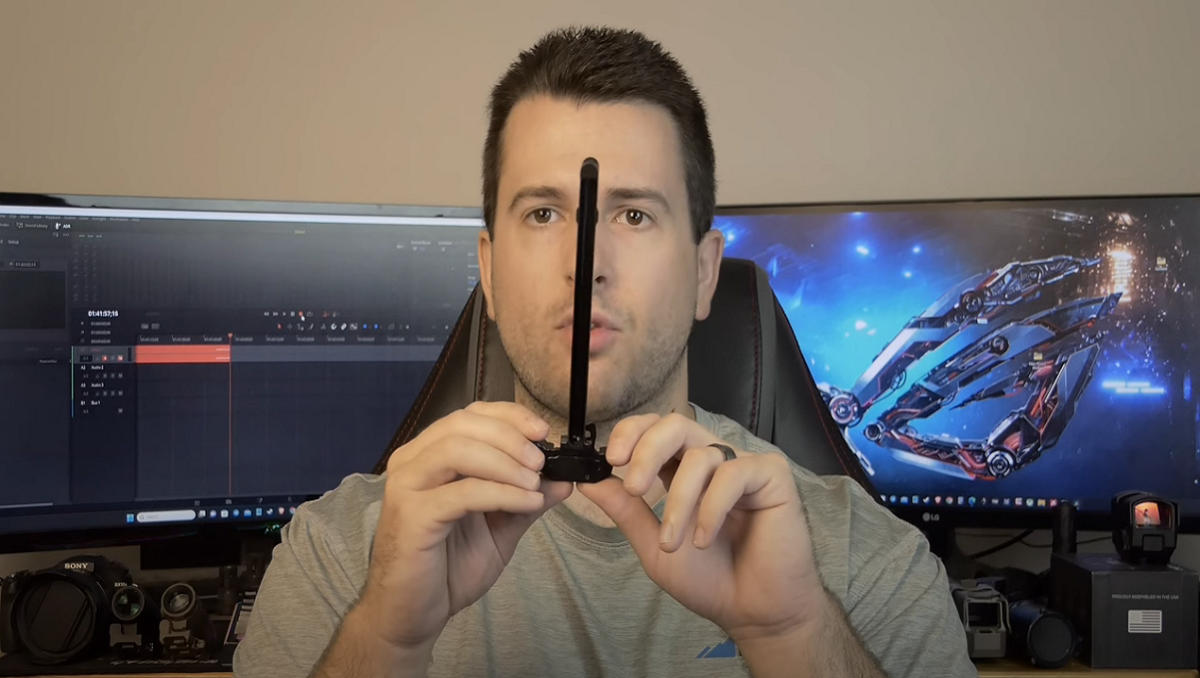
Moving back to the upper receiver, 7075 T6 aluminum mil-spec upper receiver with a W forge mark, and that's it. Going to the bolt carrier group, the bolt carrier group is another area where it's not really anything special, it's just a nice bolt carrier group, so they do offer it in Carpenter 158 and 9310, here it is 9010, I believe it's magnetically particle inspected, sharp pained, it's ground before and after, polished, it is just a black nitride BCG, but it is just done to a very high level, they go into a lot of detail on their website about all the different processes, so on and so forth, that they go into on the BCG.
On the bolt itself you have relief cuts behind the lugs, nice chambering and radiusing as well, the bolt itself seems to be very high quality, the gas seal is very nice, you have a very, very tight fit between your bolt and your carrier, all good there, grade 8 fasteners properly staked, everything is done to TDP. I don't have any problems with the carrier itself, it's not necessarily the nice stone on the market, it doesn't have any like enhanced special features, it's just a very nice mil-spec bolt carrier group, and I believe they also do offer it in a phosphate chrome, though the standard black nitride, black nitrite is basic, but it is a very good coating and they go into great detail about how this black nitride is better than some of the others on the market, which so far it's held up very well versus some other upper receivers that come worn from the factory and the coating basically wears off instantaneously.
Getting into the charging handle, this is actually one of my favorite pieces of the build, this is what they call the snatch charging handle or just the snatch, the suppressor normalized ambidextrous charging handle, and as far as names go, that is definitely not the worst.
Starting out up front here on the actual carrier hook, it does have a lot more material, they reinforce that area quite a bit, so if you ever need to mortar the gun or yank on it really hard or just over years and years of hard use, that is going to hold up a lot better than even mil-spec style charging handles, it is a 7075 charging handle, so it is the proper material as well.
Getting into the wings, it is ambidextrous, they're very large, they're knurled, easy to grab with or without gloves on, and it has a very interesting cut out here on the right side of the charging handle and that does a lot to redirect the gases, so there is actually a flow pattern in here that then pushes the gases out in front of the charging handle on the right hand side, venting them away from your eyes and mouth, breathing it in, gassing out your face, so on and so forth. On top of that, as far as suppressor normalization, it also has a much higher ridge in the back that is going to allow it to have a tighter seal to the upper receiver, in theory, limiting some of those additional gases back to the shooter's face and giving you a more pleasant experience overall.
It does all that while being less than two ounces, so it's not particularly heavy or bulky, does a good job of redirecting the gas via the actual port itself, and the higher ridge as well, on top of the fact that it is actually reinforced up front so it is stronger than a lot of other charging handles on the market, no complaints whatsoever and for an expensive high quality build I would expect to see a nice well-designed charging handle like the snatch.

The last part of the build that we need to talk about is actually going to be these iron sights, the iron sights do ship with it from the factory, which means that this is one of the few actually complete upper receivers, meaning that you cantake it out of the box and go directly to the range without slapping anything else on it. I recommend a red dot, LPVO, or something else on an 11.5, probably a red dot or a prism makes the most sense, but it's gonna also depend on what you want to use it for.
These iron sights, in my opinion, are pretty fantastic, they're extremely low profile, very rigid, they're 17-4 stainless steel, meaning that they are extremely strong, they do have a very positive lock and unlock, maybe a little bit too positive, it is very good metal on metal contact. on top of that, they only come in at just over two ounces, which is going to be about the same as some of the plastic sights on the market, whereas these are true steel sights. As far as precision goes, they look very good, they're at the proper height, fully adjustable, on an 11-5 you don't have the most sight radius, but it is still going to work very well, especially if you practice with them, though I'm almost always running a dot or some sort of magnified optic.
Getting into the muzzle device on this build, and the reason why I did not mention it earlier is because the upper receivers don't come with muzzle devices, at least as far as I interpret it from their website, which seems a little bit ridiculous considering that Griffin Armament is known for their suppressors, a lot of very hard use, very duty grade suppressors, so on and so forth, and so the fact that they don't come with a muzzle device from the factory, not even like an A2, at least I'm not sure if they throw on an A2 or something like that, does seem a little bit silly. The muzzle device that they sent out with this build to me, because they sent all this out to me, was their three-prong, two and a quarter inch flash hider, which will work on like a pin and weld 14.5, using their suppressor mounting system. They also sent me out their adapter as well so I could use my YHM Turbo K on this build, and it works very well.
The mounting system does add about an inch and about four ounces to whatever suppressor you're going to be using it on, so something that I've switched over all my other suppressors to and guns too, is going to be the Rearden Plan B, which is extremely short and lightweight, about half the length and weight of a lot of other ratcheting style systems, this is not actually a ratcheting style system. So, you have your Acme threads behind the taper, that does screw down into position, and then once the suppressor is torque down onto the taper you simply take your locking ring and lock it into position and do that once it's all the way down flush with the back of the adapter, that's when it's in the locked position, it actually has teeth on the bottom of the adapter that lock into the ring on the bottom so that the suppressor cannot move one way or the other whatsoever.
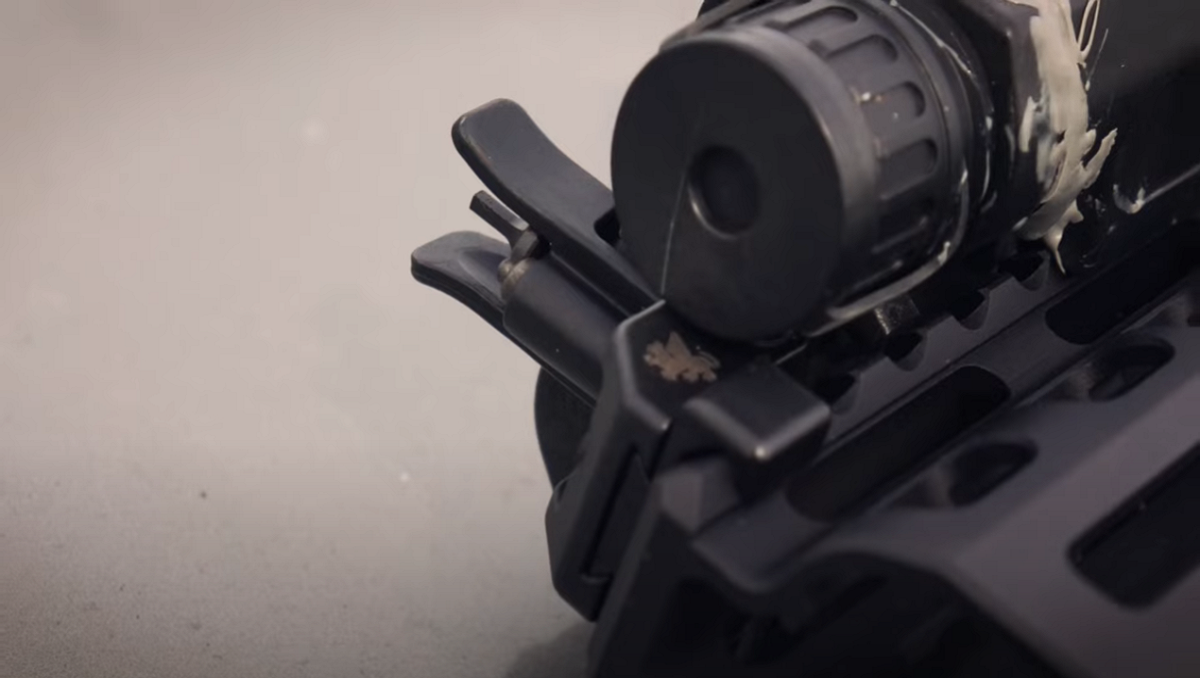
So, it's not a ratcheting system, it is what they call their dual lock system, so you have the Acme threads, the taper, and then the actual locking ring on the bottom, so it is impossible for it to back out or tighten down, it cannot move whatsoever. It is a very dependable system, a very durable system, there's nothing wearing out like a ratcheting system every time you take it on and off, there is no ratcheting so there's no metal on metal wearing every time you take the suppressor on and off, on top of that, the lockup is very, very secure, so as far as like a very hard use duty style lockup goes, I really like it, the only downside there is going to be the size, weight, and cost penalty because I think this adapter is like 250 bucks by itself, which is on the more expensive side of things for sure, and it is bigger and heavier as well. As far as the muzzle device itself goes, as a three-prong flash hider does a great job, is able to be pin and weld, with their dual lock system, dependable, durable, rock solid, but it's a little big and heavy, at least compared to some other systems on the market.
In a hard use context do you particularly care about a couple more ounces or are you more concerned about having less POI shift and a more durable, dependable lockup, you're probably much more worried about those two things than a couple ounces here or there. That should cover all of the parts in the Griffin Armament Mark 1.
When it comes to actually shooting the thing, how it performs, well, as I mentioned earlier it does a very, very good job at the shootie thing, it is a very, very softly gassed for suppressed or unsuppressed shooting, it works very well with the snatch charging handle as well to be less gassy to the face, on top of the fact that it is a properly gassed barrel from the factory. As far as shooting the thing goes, it is a very, very pleasant experience, keep in mind it is a little bit on the heavy side, just the upper receiver itself, not combining all the other stuff that I threw on it to make it a very heavy system. So, as far as shooting the thing goes, it performs very well, one of my favorite 11 fives, is going to be comparable to a Geissele 11.5 or some of the other nice rupper receivers on the market in terms of gassing. Raw shooting performance is very, very high, I don't think this upper receiver is going to hold back anyone in terms of speed.
In terms of accuracy testing it didn't do all that great, especially for we have a 416R stainless steel heavy barrel that in theory should provide you with very, very tight groupings. The three loads that we tested for accuracy was 62 grain L2A1, which is just an M8 55 clone, we have ADI69 grain match, and then some Federal Gold Medal match 69 grain as well, and we got anywhere from 1.5 to 3 MOA across the board, not particularly fantastic, keep in mind that the groups that I was shooting that day were with a Continental one to six, so I didn't have that much magnification so I was shooting at 50 yards, so you need to double those group sizes at 100 yards.
The accuracy was all right, keep in mind that we're at a fairly low round count so maybe as we get more ammunition through it, it will break in a little bit more and the accuracy will tighten up, we'll get some heavier loads in there as well, but as it stands right now it didn't really perform any better than a lot of generic 11 fives on the market, 11.5 Hansen's, 11.5 Roscoe, Bloodline barrels, just their nitride 4150 barrels, have performed better in terms of accuracy. On top of that, I've mentioned it, the Geissele 11.5 also performed better for about the same price, lighter, way more durable as well, cold hammer forge, chrome lined, same price as well for the barrels, it's lighter, more accurate in my testing and way more durable.

So, as of right now with their HEDP barrel system, I'm not really getting the benefit that I would hope to see out of a heavy 416R stainless steel barrel, and in terms of durability it might be very good for a 416 barrel, but it's probably still not going to compete with even some of the more basic 4140 or 4150 barrels on the market that also performed a little bit better in terms of accuracy while also being lighter and cheaper, and this isn't just my complaint with the Griffin Armament system, this is my complaint with basically every short heavy 416 556 barrel, especially if they're marketed towards a very hard duty use sort of context, I think that they don't really make that much sense, you might be getting just a little extra performance in terms of accuracy, but you're generally heavier, more expensive, and way less durable, so the cons outweigh the pros.
The rest of the system, I think the hand guard is fantastic, I think the way that they mount the gas block to the barrel, double dimpled, plus pinned, fantastic hand, guard, super lightweight, super rigid, the BCG is perfectly fine, it's nothing really special. The snatch charging handle is fantastic, I would buy this on its own, it does come with very nice iron sights, it comes with the rail panels installed. It doesn't come with a muzzle device for some reason, however, their muzzle devices are good, if you're looking for just a very, very strong, durable lockup, something that's never going to shift or come loose on you, I think it can definitely make sense for that application, there's just a size, weight, and cost penalty for going with their system.