
The Best Budget Dot? - Primary Arms ACSS CQB MD 25
Updated
49 months ago
Good morning everyone, hope you’re all having a wonderful day today. Today we’re gonna be taking a look at the Primary Arms SLX MD25 with the ACSS CQB reticle.
Full disclosure on the Primary Arms MD25 is we did pay our own money for this optic, it was not sent out, however, we did pay a dealer price for it, as I am a dealer for Primary Arms optic, so basically everything that we get from them is a dealer price.
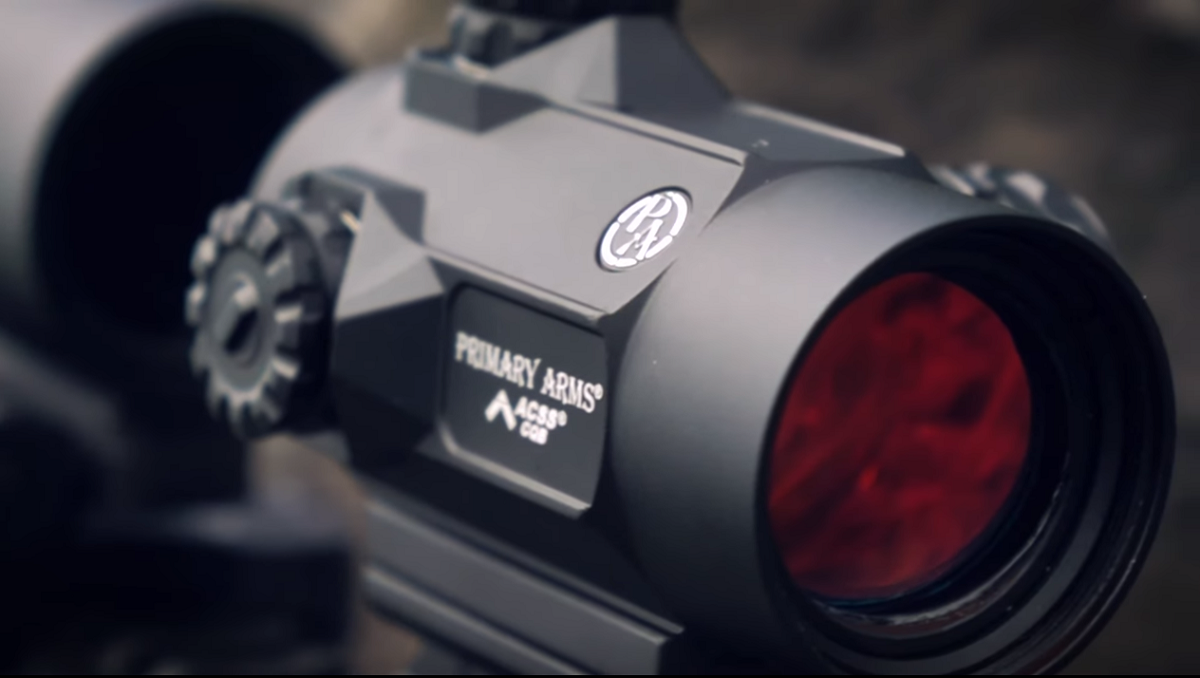
On top of that, personally I do have a relationship with Primary Arms and they actually sent did send me out the GLX 2.5-10 behind me, which you guys have also seen on the channel at this point, so there is a relationship there, so go ahead and keep that in mind throughout the review.
Wikiarms.com Search Engine Results
Want to see your products here? Click this
link.
 Powered by Wikiarms.com
Getting into the specifics on the MD25, as the name implies, this is a 25 millimeter objective lens red dot. It’s a lot larger than your standard 20 millimeter objective, you know, the T1, T2 micro-style of optics, so you get a very nice large window that a lot of people seem to prefer. I am also one of those people who prefer larger windows and so this is going to give you that without all the additional bulk of some other red dots on the market.
The body of the optic itself, I believe, is made out of 6061 T6 aluminum, it didn’t say on their website exactly what it was made out of, but 6061 is kind of the baseline or the standard of the market, especially in the lower price tier of optics, some more expensive optics will be 7075 titanium, so on and so forth, but, again, those optics are usually a little bit more expensive.
On the body itself, we have a very simple, you have a capped windage and elevation knob that are nicely knurled, they’re easy to remove, they aren’t captured, so if you take them off don’t lose them, very simple half MOA adjustments.
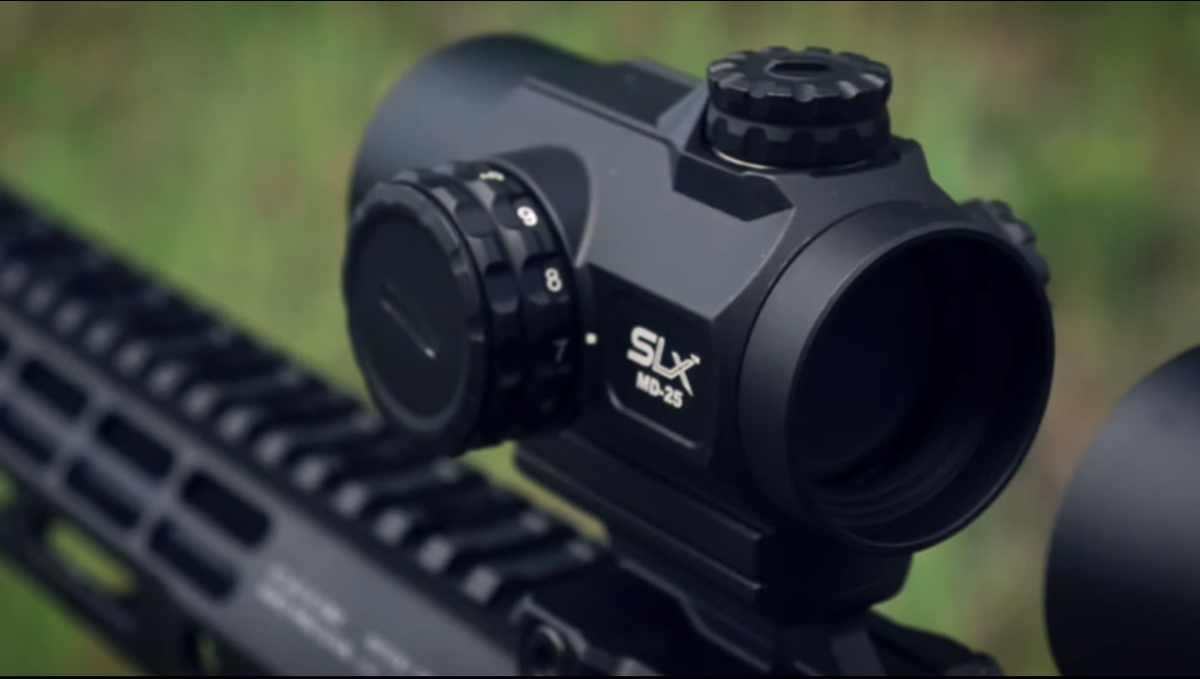
On the left side of the optic body we have our rotary dial, so there are no buttons on this, I know some people don’t like rubber buttons on their optics because they think that they’re more prone to breaking or at least a little bit more difficult to figure out what brightness you’re actually at. This is very simple, obviously, and you can figure out exactly what brightness setting you are just by looking at it.
Talking about illumination, battery life type and features on this specific optic keep in mind that this is the ACSS CQB version, so that reticle, that emitter is going to reduce your battery life, fairly substantially as it does have to illuminate quite a bit more than just like your standard 2MOA dot.
On this specific model with a 2032 battery, a medium setting or what they say is a daylight bright setting, you get a 12 000 hours of constant on, however, this has Primary Arms auto-life technology that means after a set amount of time it turns off and then when it senses motion it turns back on. I have seen this at rest off and then you touch it and it will automatically turn back on. It’s never not turned on for me when I needed it to, so as far that goes, basically as an industry standard almost at this point, most good red dots, even budget red dots, have some sort of motion activation, and from what I’ve seen they’ve all worked quite well.
That 12 000 battery life might seem lower, compared to other 50 000-hour battery life red dots, however, keep in mind that’s 12 000 hours of use with the optic and the rifle combination, of course, so, again, those 12 000 hours would probably be used up over multiple years instead of just a single year, as the 12 000 hours would imply, because, again, you have that auto on, auto off technology, though, again, most people are probably changing out their batteries every year, every six months or so, which is probably a good idea as battery life does tend to fluctuate greatly, depending on your environmentals, and, again, more realistically you’re probably you’re running it on a little bit than a medium brightness setting. Now, if I didn’t mention it already, the battery type is the 2032, which is very standard at this point within the industry.

The mount design that they chose to go with on here is a good design, so it’s a very simple two-crossbolt design, it is a T1, T2 style of mount, which means that this can be swapped out with a wide variety of aftermarket mounts, if you want a much taller or just you have a preference for a different mount in general.
You do have two steel crossbolts, which is very nice, so you can apply a lot of clamping force over a large surface area, it’s something I like to see. On top of that, on the bottom of the mount you do have integrated recoil lugs, which increases your contact surface and provides a hard stop during recoil, so that, in theory, it has batter recoil holding abilities or better zero holding abilities during recoil.
On top of that, it also comes with a riser plate, a 0.2-inch riser plate, so the base height of the optic, it has a low mount, which is like 1.1 inches or something like that. It has 1.435 and then with the 0.2-inch riser plate all the way up to a lower one-third, which is a 1.635 or so on and so forth, something in that range.
As you can see it currently, I do have the riser plate installed because I like to have a little bit taller of an optic mount generally, however, depending if I’m using it with a magnifier, I don’t always like to have it at the 193 height because then it is harder to find a magnifier or a magnifier mount that is compatible with those super tall style of optic mounts.

Overall, the body and mounts are fairly well designed and right out of box. I think these come in at just over 200$ with the ACSS CQB reticle. I think everything is fairly well designed, it’s very simple, and it comes in at a weight of 6.5 ounces, which is only about 2 to 2.5 ounces more than a comparable T1, T2 style of optic with, of course, a 20 millimeter objective lens.
It is a little bit heavier, a little bit more bulky than those smaller optics, but most people probably aren’t gonna be complaining about that two additional ounces and you do get more field of view, bigger window, which, again, is a preferred solution or a preferred optic size for most people, however, some people don’t care at all and their 20-millimeter window works just fine for them.
I am one of those people that do enjoy larger body optics or larger windowed optics, just in general, which is why I run a lot of them and you guys have probably seen a lot of them on the channel for testing.
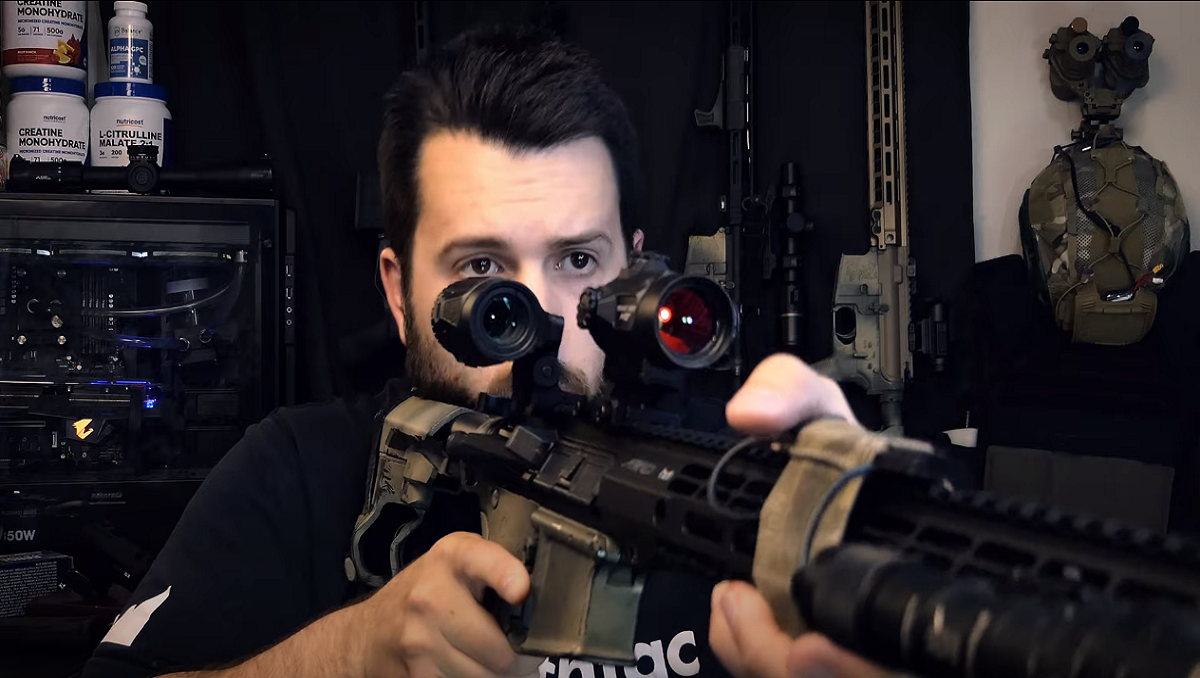
Getting into the glass quality and reticle, which are probably the two most important things for most people, the glass quality itself is what I would consider to be good, it does have a noticeable blue-green notch filter. It’s not bothersome whatsoever and it’s and it’s not as bad as I’ve seen on other optics.
The glass quality itself is fairly sharps, it’s flat, crisp enough, there’s no real problems there. It does look good under multiple magnifiers that I’ve tested, multiple 3x magnifiers, and, of course, the Vortex 6x magnifier as well.
The reticle does not look quite as good under 6x magnification, though that could be an issue with that specific magnifier. Now, the reticle itself is, of course, the ACS CQB reticle, which, if you are familiar with ACSS reticles, at this point it’s not going to be anything special to you.
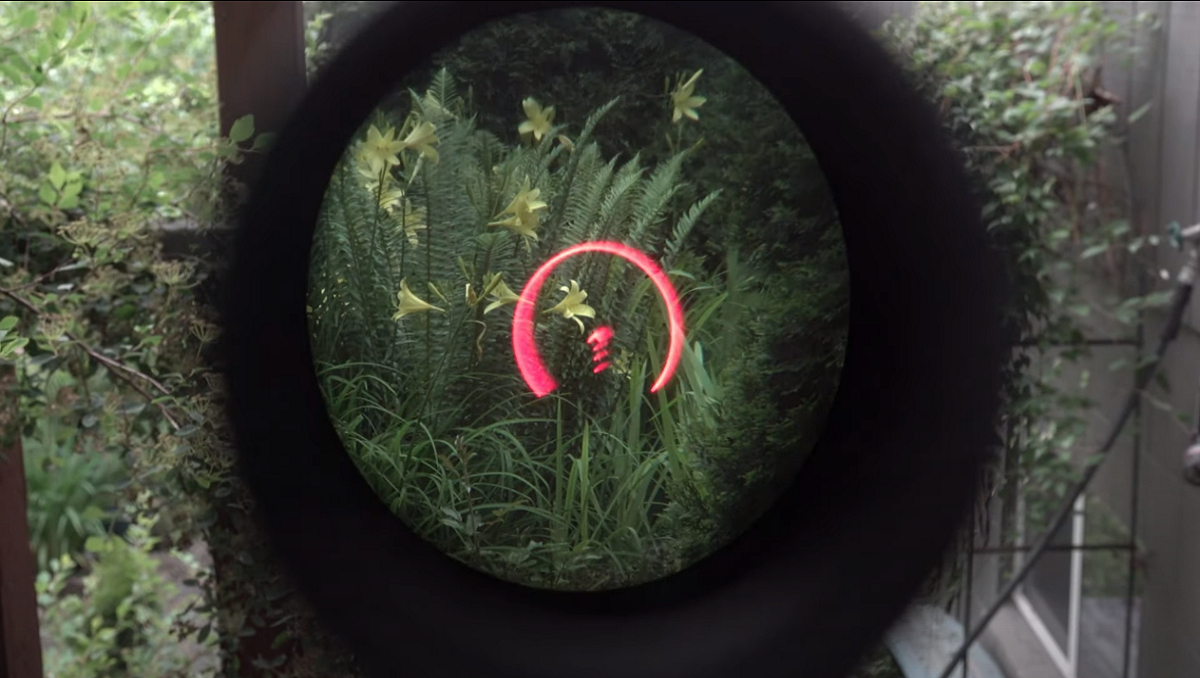
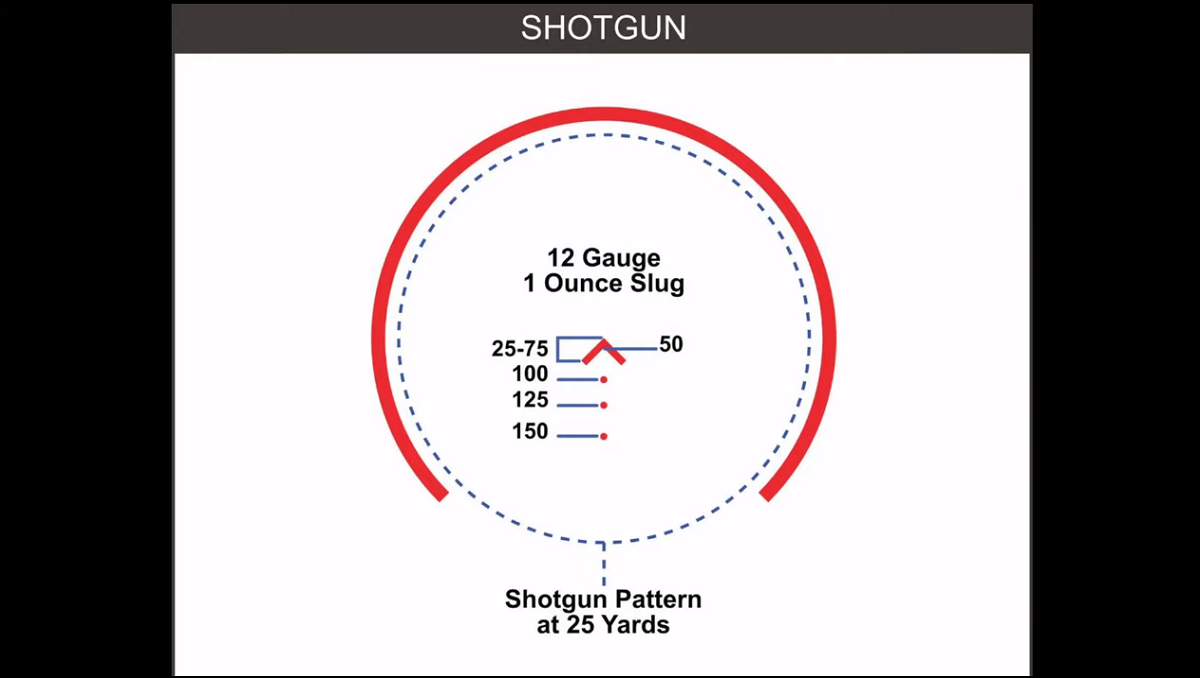
You have a center Chevron that doubles as auto-ranging features as well as your fast acquisition as well as having a precision aiming point using the tip of the Chevron for, again, more precise, more refined point of aim. On the outside of that you have a very large two-thirds horseshoe or so that acts, again, as your fast acquisition, also doubles as, I believe, shotgun spread at 25 yards, so it has a lot of different features built into it.
On top of the Chevron and the horseshoe you also have a BDC holds, which I believe are calculated for 14.5-icnh 556, 55 slash 62 grain ammunition out to four, five and six hundred yards as well as auto-ranging feature from the bottom of the BDC using the Chevron as well, so you can kind of, if you can see a target’s width or their height, you can use the reticle to range that specific target, so, again, if you know your target size you can figure out roughly how far away it is using the auto-ranging features within the reticle.
So, like just about every ACSS reticle that I’ve tested at this point, it is very well thought out, it’s very well designed, Dimitri does his homework over there and he designs reticles, meet their intended use case application.
The one minor drawback of this reticle was kind of two minor drawbacks to it. One of them is that at about 300 yards small targets can kind of disappear within the Chevron, so if you’re taking like a low probability shot, not shooting like full-sized steel targets, so like a low probability shot at like 800 yards, say a 8-inch circle or something like that.
The Chevron itself can kind of obscure most of that and it might be kind of difficult to tell exactly where you’re holding in relation to the target, however, that’s in a very specific kind of niche circumstances, so it is a minor drawback and worth noting, however, again, for most people probably not going to be that big of an issue.
Another minor drawback of the reticle, which isn’t really a drawback of the reticle itself, I believe it has to do with the emitter and the glass quality or notch builders or what have you, but under 6x magnification with the Vortex 6x micro magnifier it doesn’t look particularly good, no matter how I adjust the diopter on the micro 6x, it still looks very washed out. There are certain instances where I can get it to look good for a moment, but then I move my head a little bit and the entire reticle will kind of just wash out.
Wikiarms.com Search Engine Results
Want to see your products here? Click this
link.
Powered by Wikiarms.com
As you’ll see in the footage that I’ll go ahead and start rolling in here, I was able to take this optic out to 500 yards using the holds provided within the BDC, I believe on this arrow-precision 12.5, and I was able to take it out to 500 yards without issue using just crappy steel cased ammunition.
With the 6x magnifier it did not look good, however, with a 3x magnifier it actually does look good, so it might be something to do with this magnifier specifically, so I really don’t wanna blame the optic for that and, again, it’s not really a fault of the reticle itself, just something to do with the glass quality, the emitter itself perhaps, it’s just not quite as precise and refined as we would like it to be, however, again, the reticle does do its job in terms of having all the auto-ranging features you want, having BDC features, which work very well when paired with 3x or 4x magnifiers, basically all of those magnifiers that I tested, the reticle looks very good under, it’s only under more aggressive magnification that, again, red dots in general don’t particularly look all that great under higher magnification.

Oh, a hit, nice!
As far as actually using the MD25, combined with the, as the name implies, CQB reticle, in close quarters environments like inside of 50, 70, 100 yards, it works very, very well. It is one of my favorite designs, it’s basically the Chevron or even just a 2MOA dot, 1MOA dot, whatever it happens to be, but basically that center dot, plus horseshoe, plus donut of death, is basically my favorite combo for a CQB style of optic, and, again, not without any magnification on it whatsoever.
The reticle on maximum brightness gets more than daylight bright, probably cuts your battery life down quite a bit, but I do tend to run my dots a little bit harder than I need to, and , again, inside of that 50, 100 yards range it is a very, very fast and very precise reticle because, again, you can still refine your point of aim to a great extent with that center Chevron reticle, because, again, you do have that very fine tip, so the CQB reticle combined with the larger window size on the MD25 kind of does both of my biggest preferences when it comes to a red dot and speed shooting inside of 100 yards, when it comes to transitioning from targets to targets, fast acquisition of the reticle with, again, that outer horseshoe area, hits kind of all of the things that I am personally looking for in a red dot.

On top of that, it does have BDC holds and auto-ranging holds, so if you know, really know the ins and outs of the reticle, it can be very useful in a wide variety of circumstances. It’s not necessarily perfect as it is, you know, it’s a little bigger, it’s a little heavier, you are sacrificing battery life to get that ACSS CQB reticle, and, again, there is that not necessarily long range, but kind of mid-range environment where you’re not really… there’s not really much drop with 556, so that center Chevron might be covering up a little more of your target than you would like, so if you’re taking like a low percentage shot at, again, about 250 to 350 yards, depending on your barrel length and ammunition, it could be a little bit hard to discern where you’re actually holding that Chevron in relation to your target.
Overall, for 200 bucks, it’s a pretty stellar deal with only a few very minor drawbacks, and currently off the top of my head, I don’t think I can think of any another red dot that provides the enhanced reticle features and the larger window size at around that 200-dollar price tag. There are options that do one or the other, but, again, at around 200 dollars and maybe a little bit under that on sale, I don’t know if there’s another optic that provides this much value on the market.
So, if you’re looking for a red dot with some auto-ranging BDC features and has a little bit larger window, there’s not really much of a reason not to pick up the MD25 ACSS, especially at the price point, but, again, it’s if you’re looking for those specific features, if you just want a, you know, home-defense optic, you really don’t need the larger window size, again, unless it’s a preference and you definitely don’t need the BDC holds, again, for a dedicated home-defense guns, but this is a very flexible, very usable optic in a lot of different scenarios, and if you’re looking for a more versatile red dot tan just your standard 2MOA dot, this is definitely something to consider.