
The Best Budget DMR Scope - Primary Arms SLX FFP 4-14 R-Grid 2B Reticle
Updated
44 months ago
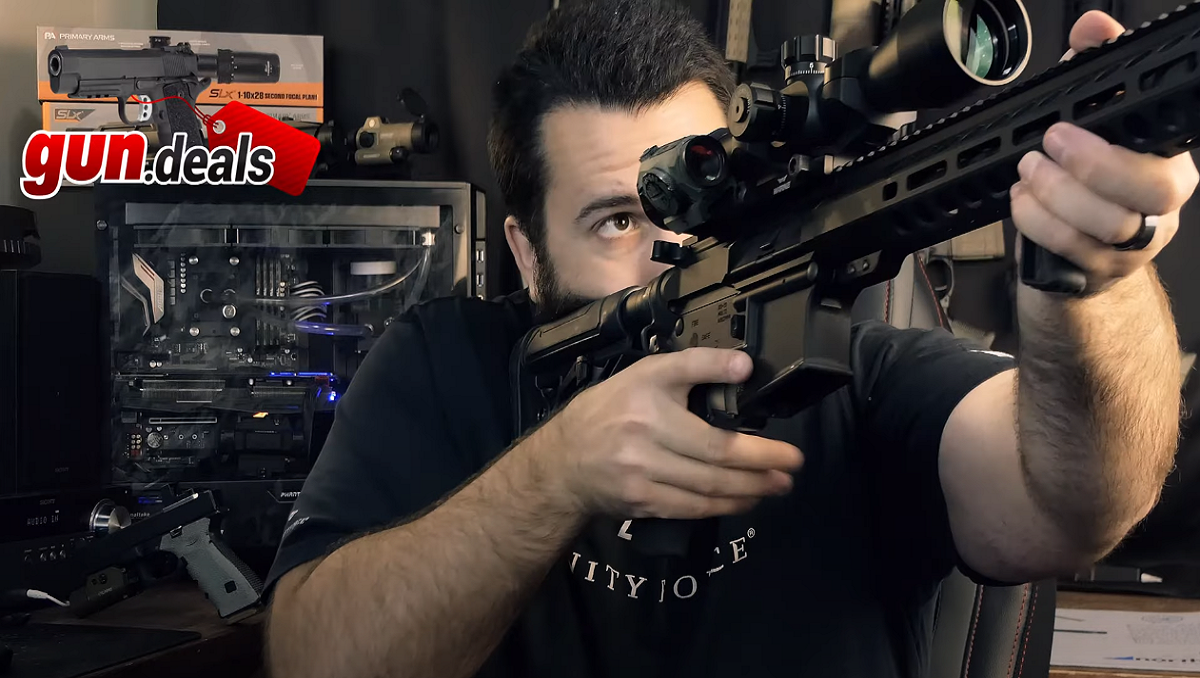
Good morning, everyone, this is John with gun.deals, and today we're taking a look at an extremely high-value optic in the mid-range magnification, this is the Primary Arms SLX 4-14 with the R-Grid 2B reticle.
Full disclosure on the Primary Arms SLX 4-14 R-Grid 2B reticle version is that I am a dealer for Primary Arms optics and occasionally they send me optics to review. For this specific optic, I paid my own money for it, however, I did pay a reduced amount for it, so there is a relationship there with Primary Arms, I did pay my own money for this optic, however, just a reduced amount.
Wikiarms.com Search Engine Results
Want to see your products here? Click this
link.
 Powered by Wikiarms.com
Getting into specifics and the feature set of the SLX 4-14, this is a little bit of an older design from Primary Arms that kind of has a body style that you'll see from a lot of different optics because these are manufactured overseas, you will see a lot of different feature sets and architectures crammed into basically the exact same frame because there's probably a million of these bodies floating around, and a bunch of different companies shoving their own glass and feature set inside. Primary Arms happens to be one of those companies, doing it for a very good price, very good reticle selection, but you will see this basically exact same scope and a lot of different configurations from other companies. This one here is about 12 inches long, about 25 ounces, so for a 4-14 it's not the lightest on the market, that's going to be kind of one of the downsides, there are some external features on this optic, for the price are alright, but not exceptional.

Getting into the turrets themselves, these are exposed, non-locking turrets, they are resettable, they don't have a zero stop or anything like that, so they don't really have any mid-range or high-end features. The price on these optics is somewhere between 250 and 350 dollars, depending on what option you're getting, so there is some variance there, but those are still fairly inexpensive, especially for a first focal plane optic with such a good reticle set.
The turrets themselves are in 0.1 mil increments, which is perfectly fine, your windage and elevation, the clicks themselves are nice and tactile, the markings are done quite well, they're tall enough, however, because they're not locking, it is something that I would definitely keep an eye on, to make sure they don't inadvertently adjust themselves while you're doing something.
Getting into the Parallax knob on the left-hand side, very nicely, it goes all the way down to 10 yards, so for some sort of competition shooters, like 22 NRL where you're shooting at very small targets up close and you want to take out all that arrow, get as much focus as you can, on some very close targets that are very small. 10 yards as the closest Parallax setting is very nice.
Oddly enough, they do the illumination a step back, so you have your Parallax, and then behind that is your illumination. It has six daylight settings and an off-setting in between each one, the clicks on here are actually super nice and tactile, just locks right into position. On setting six, it is daylight tinted, not particularly bright, but for the money and the style of scope, it's not like you're trying to use it like a LPVO at 1X up close or anything else like that. The illumination is basically for reduced slight or low light situations or to add some contrast for different shooting environments, or what have you.
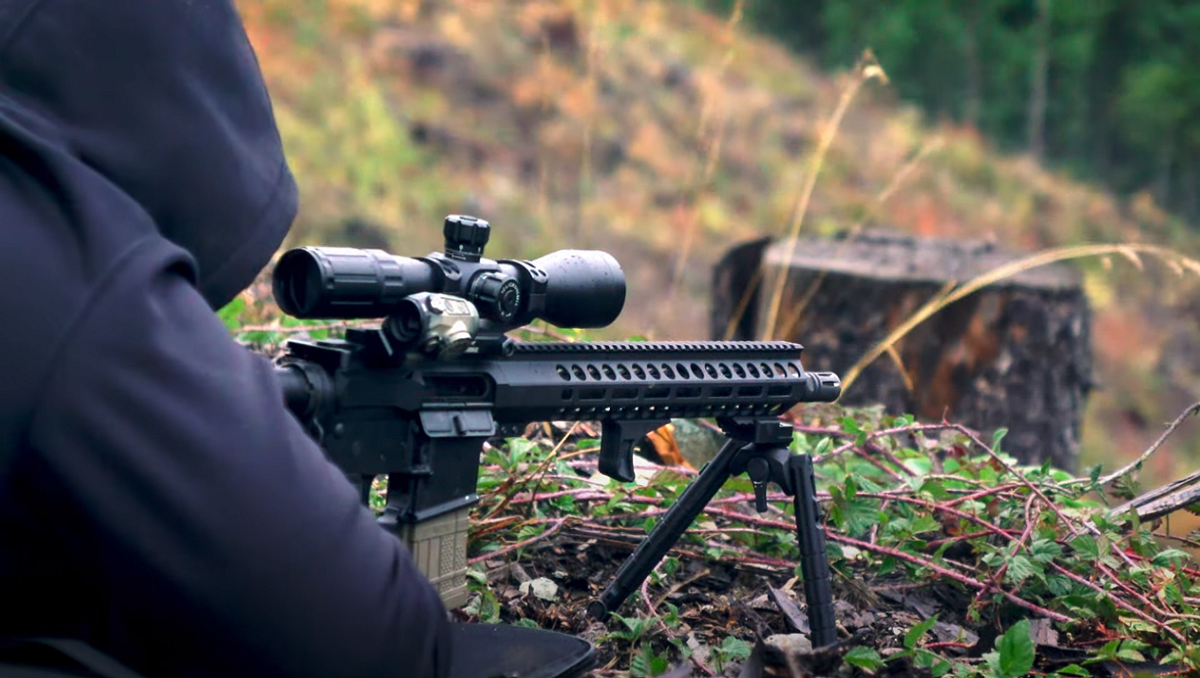
The one thing that I will say about it is, unfortunately, only the center section of the reticle illuminates, so they give you an excellent grid reticle in the R-Grid 2B reticle, but the grid does not light up, only the center section does, so it will work at distance if you're dialing, but if you're trying to use the grid in low light situations, not going to be very easy.
Moving back from there, we have our magnification ring, there is some knurling on it, it's not particularly grippy, and there's no built-in throw lever or anything else like that. This is in a worn ramp 30 mount, so 30-millimeter rings with a built-in offset red dot for the Sig Romeo 5, which makes it a little bit more difficult to adjust the magnification ring, so I'm not going to complain about that because I have put it in this mount with the Sig Romeo 5 offset. The one thing I will say about the throw itself is, it is actually a little bit longer than some other optics on the market, it's a 210-degree throw versus 180-degree throw, just meaning that you need to turn it further to get from 4-14. Blasting on the actual optic body itself, is your rear diopter for adjusting the reticle to your eyes, not for focus, that's what Parallax is for, but for adjusting the reticle itself, to make sure that it is sharp and crisp at all times.
Wikiarms.com Search Engine Results
Want to see your products here? Click this
link.
See more results
for SIG Romeo5 on Wikiarms.com
Powered by Wikiarms.com
Getting into the eye relief, eye box, and field of view on the 4-14x44, keep in mind that this is just a 30-millimeter main tube, so it's not going to be as big as some more expensive optics on the market. The claimed eye relief is something ridiculously precise, I think they claim like 3.22 inches or something like that at 4X. At 4X, it is definitely a little tight, but the eye relief is honestly pretty good, you have a pretty forgiving eye relief and eye box left, right, up, and down, for a scope with medium magnification.
If we slowly work that all the way up to 14x, so the eye relief certainly tightens up, you definitely still have a good amount of forward and back motion, and a little bit left, right, up, and down, so for a 4-14, it is fairly forgiving, it is fairly easy to use, and remember that this is combined with a first focal plane reticle, so unlike the SLX 1-10, that's the second focal plane optic that we talked about a little while ago, that optic is a second focal plane, so you basically need to be at 10x for that reticle to work. With this optic, you can be anywhere from 4-14 with a first focal plane grid and use that grid and it'll be true at any given magnification. That is a pretty big advantage because you don't always need to be cranked up to maximum magnification.
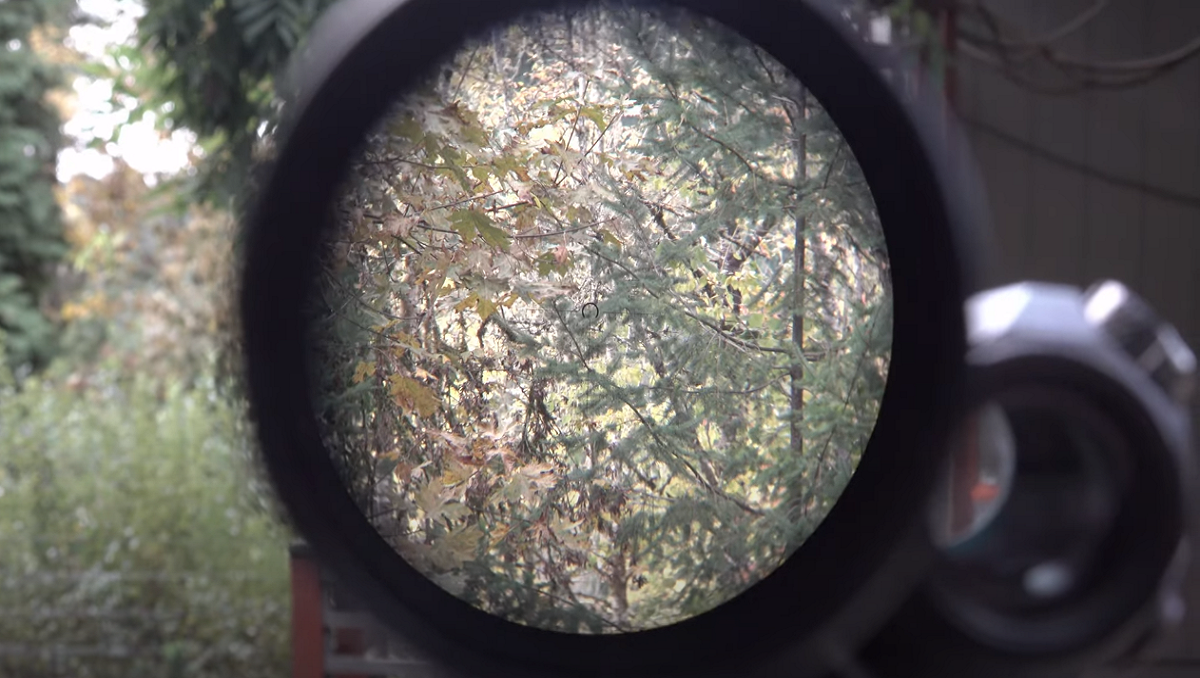
Something else we need to talk about on this is the field of view. Field of view at 4X is 27.2 feet, which kind of translates to around 110 feet at 1X on an LPVO, if you want to kind of compare it to, to give you a little bit of reference. In my opinion, anything above 100 feet is good, anything above 110 feet is very good, and anything above 120 is basically phenomenal, top-tier, very, very close to the top of the stack.
With the SLX 4-14 that 27.2-feet field of view at the low end is actually very good or just underneath, very good on my scale, but it is very good and actually a lot better than a lot of other optics in their lineup. For instance, the 2 ½-10 has a lot more diminutive field of view, and that's a GLX 6, 7, almost $800 scope, this is a $300 scope, so the field of view, eye relief box, is all very good, I would say, especially for the budget price that they're asking for it, for the mid-range magnification, you get a very usable scope with a very good field of view, meaning that you see more at all of those different magnification levels, which is why you're buying a magnified optic.
We get into the actual glass quality itself, 4-14x44 millimeter, it's a decent glass, it's definitely bright enough, it's crisp enough, it gives you enough detail, 14 magnification on the top-end is more than enough for me personally, out to 700 or even 800 yards.
This being a Chinese manufactured optic, manufactured overseas, the glass quality is what you would expect from an optic in this price range, it's definitely not going to be impressive compared to the competition, but it is certainly good enough, and it is usable. If you want better glass, you are going to have to spend more money, get into that 500-700 dollar range, and then, if you want top-tier glass, you're looking at 1000-2000-3000 dollars, plus, in some cases. The glass quality on here, for the money, is definitely usable. When we were using it last time it was out to 500 and 600 yards in rain, and kind of dusky conditions, so it's definitely getting a little dark out, and the glass was perfectly fine, out to 500-600 yards in sub-optimal conditions.
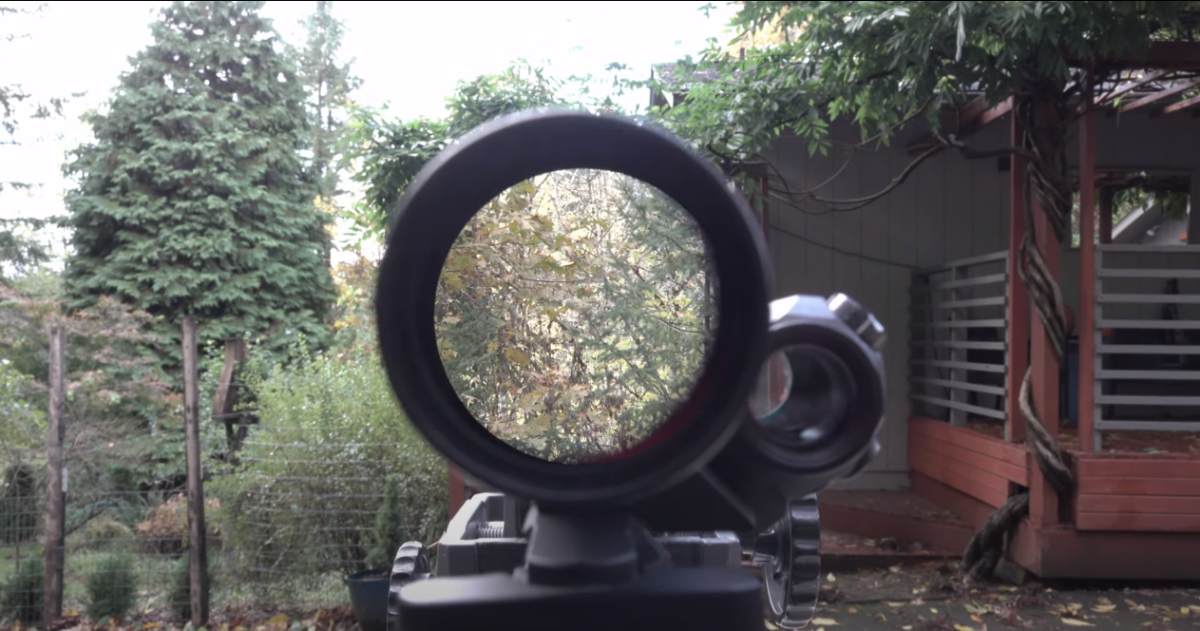
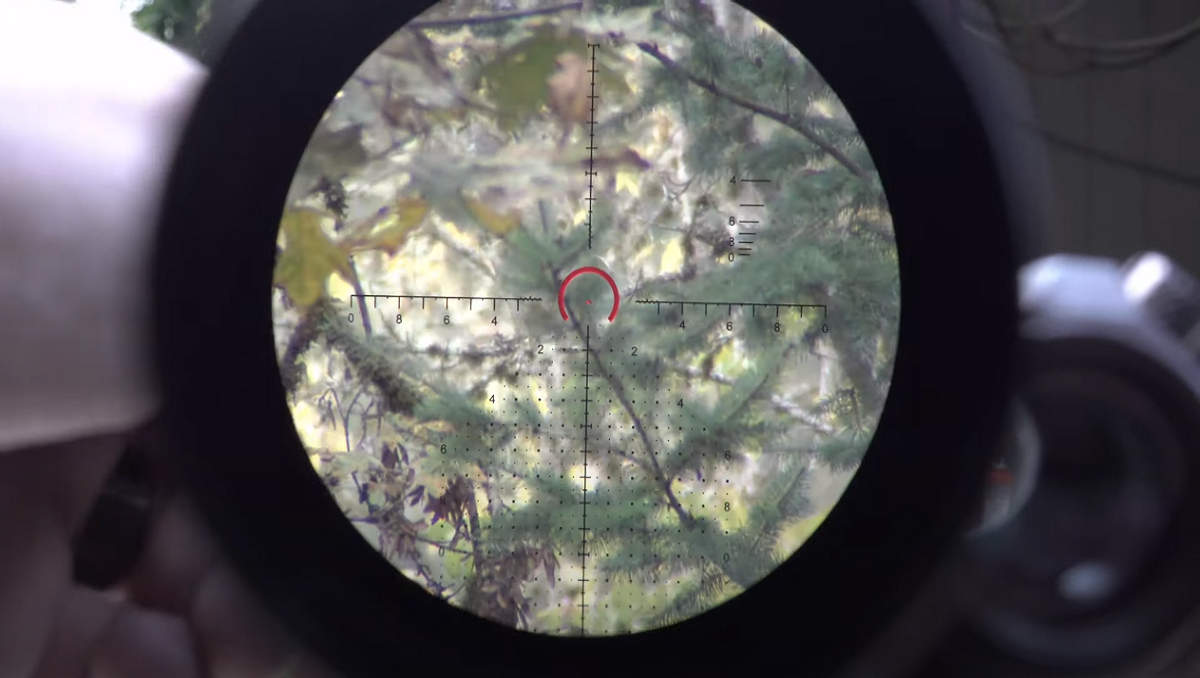
Getting into the reticle itself, on this specific model, this is the R-Grid 2B reticle, basically it is designed around your standard ACSS Center Chevron outer horseshoe, and then, below all of that, you have a half mil by half mil Christmas tree grid. Personally, I am a big fan of grids, especially when we get into a little bit higher magnification, 10x, 12x, in this case 14x. Grids start to become very usable, especially if you are shooting at unknown distances, as I usually do shoot at the distance, at approximated distances, but I don't know exactly where they are, I don't use laser rangefinders to figure out exactly what my distance and my drop is.
I'm usually using ammo that I haven't used before, in the case of this gun, this is on a Davidson Defense Journeyman, a complete rifle from them, and this one here, we were using 55-grain Norma, out to 500 and 600 yards for the first time on this gun. Pretty decent ammo, the gun itself is not particularly accurate, but we were still able to get very good hits at extended distances, and what I really like about the R-Grid 2B reticle is that at about 600-ish yards, I was using 4 ½ mils, I believe, and I did a dead hold and noticed it was exactly one dot off to the right and the grid, that I usually just use that location in the grid, move over, adjust, and then take another shot, and was able to get an impact.
Wikiarms.com Search Engine Results
Want to see your products here? Click this
link.
Powered by Wikiarms.com
And that, for me personally, is one of the biggest advantages of having a grid reticle. Keep in mind, this grid reticle is half mil by half mil, so it is very precise, you can make very fine adjustments, even at smaller targets at extended distances. It's very easy if you can spot your miss, to adjust very quickly within the grid itself, without having to come off, or dial, or do anything silly like that. You can very quickly make adjustments on the fly, if you get a wind or a drop call Incorrect, and if you can spot your misses, which is always a bit tricky, depending on your specific circumstances, and if you are shooting at known distances, you know the wind, you know the drop, everything's calculated with the load that you like, you can obviously also just hold in the grid to begin with, if you are fairly certain about where your bowl is going to be impacted using the grid, or if you want to, you can use the turrets.
Personally, because the grid is so refined and easy to use with a good field of view, good eye box, eye relief, decent glass quality, I would almost prefer capped turrets and I would just default to using the grid because this is also a first focal plane, so it is always true, no matter what magnification you're at. At 4X, the grid is very small, so I wouldn't be using it at 4X, but 6, 8, 10, 12, so on and so forth, it looks very good and is very usable.
Something that I do want to mention specifically about this Chevron and outer horseshoe, and some of their other optics, the Chevron is too large and will obstruct a lot of the target, or a lot of the center area, wherever you happen to be holding, especially if you're using turrets like on some of their nicer scopes, they have very nice turrets, and if you use the turrets to use a dead hold, then that Chevron is obscuring a lot of your targets. On the 4-14 model, they use a very small, very precise Chevron that does not obscure a lot of your target, which is a huge improvement over some of their larger, a little bit of intrusive Chevron designs.
On top of that, the outer horseshoe is not quite as thick as other of their reticles are either, a lot of that is due to this is a 4-14, so you're not really going to be shooting it up close, so you don't necessarily need some sort of super bold, snap, aiming reference within the reticle for your close-range shooting.
For me personally, if I'm using this 4-14 on something that might need to be used up close, or if I just want to have the option I'm either going to be running a pinky back red dot or an offset red dot, and in this case, it's built-in to the rings themselves, which I quite like, so for me personally, the 4-14 is done really well, the center Chevron is very precise, which is very nice for getting a refined zero, it's very easy to do on this optic, it's not big or obtrusive like some of other Primary Arms reticles or ACSS reticles, and at distance and at higher magnification levels, I do tend to prefer to just use the grid, as it's very refined, very easy. Half mil by half mil is more than precise enough for inside of 700-800 yards, even at reduced size-targets.
If this were $500 or $600 optic I would still give it high marks for the field of view, eye box, eye relief, being a very usable scope, and I would also still applaud them on the reticle design, I think the reticle is basically perfect. If I didn't mention it earlier, they of course have all the ACSS auto-ranging features built- in to the reticle as well, that's not what most of us are going to be here, for most of us are going to be here for the grid specifically. At this price point of 300 dollars, the turrets aren't particularly great, the styling is a little old, it's not necessarily the nicest magnification ring in the world, the glass isn't perfect, but for $300 you are getting such a usable scope with decent features, decent glass quality, and an excellent reticle, that is probably my favorite in this price category, and the next and the next price category as well.
The R-Grid to be reticle for a mid-range magnification, or something similar to it, basically just a half by half mil grid is going to be very usable, especially at that 4-14 magnification range. Pairs very well for it, of course, it's also first focal plane, so that reticle is usable at all magnification levels.
At the end of the day, if you're on a budget, looking for a mid-range scope in terms of magnification level, first focal plane with a very usable reticle for any gun, ammunition, barrel length that you want to throw into it, the Primary Arms SLX 4-14, specifically with the R-Grid 2B reticle is a great place to look. They have a bunch of different models of this scope, with different reticles for specific guns, different styles of reticles, so on and so forth. They kind of do have different flavorings, but personally, I think that the R-Grid 2B reticle is by far the best reticle that they offer for the 4-14 line.

So, at the end of the day, guys, for $300, we're occasionally under 300, as I believe the scope is actually currently on sale, I think it is a phenomenal value, and something that if you don't need the nicer turrets and the better glass quality, something that you should definitely look at. If you're looking for better turrets, better glass quality, that sort of thing, you're going to kind of be stuck with the GLX line or other manufacturers as well.