
Swampfox Trihawk - Excellent 3x Prism (it is a little chunky though)
Updated
49 months ago
Good morning, everyone, hope you’re all having a wonderful day today. Today we’re gonna be taking a look at the Swampfox Trihawk 3x Prism.
Full disclosure on the Swampfox Trihawk, we did pay full retail price for this from OpticsPlanet, I believe we paid 245$, which for a prism of this quality is an exceptionally good deal. I do personally have a relationship with Swampfox optics, I talked to them a couple times and they helped me do a giveaway, however, I never gotten free product or money or anything from them for saying one thing or other about their products.
I reviewed a lot of Swampfox products and I tend to like most of them. The only real product of theirs that I don’t like all that much the Tomahawk series of LPVO’s, just because their Arrowhead series is so much better and not that much money.
Wikiarms.com Search Engine Results
Want to see your products here? Click this
link.
 Powered by Wikiarms.com
Wikiarms.com Search Engine Results
Want to see your products here? Click this
link.
Powered by Wikiarms.com
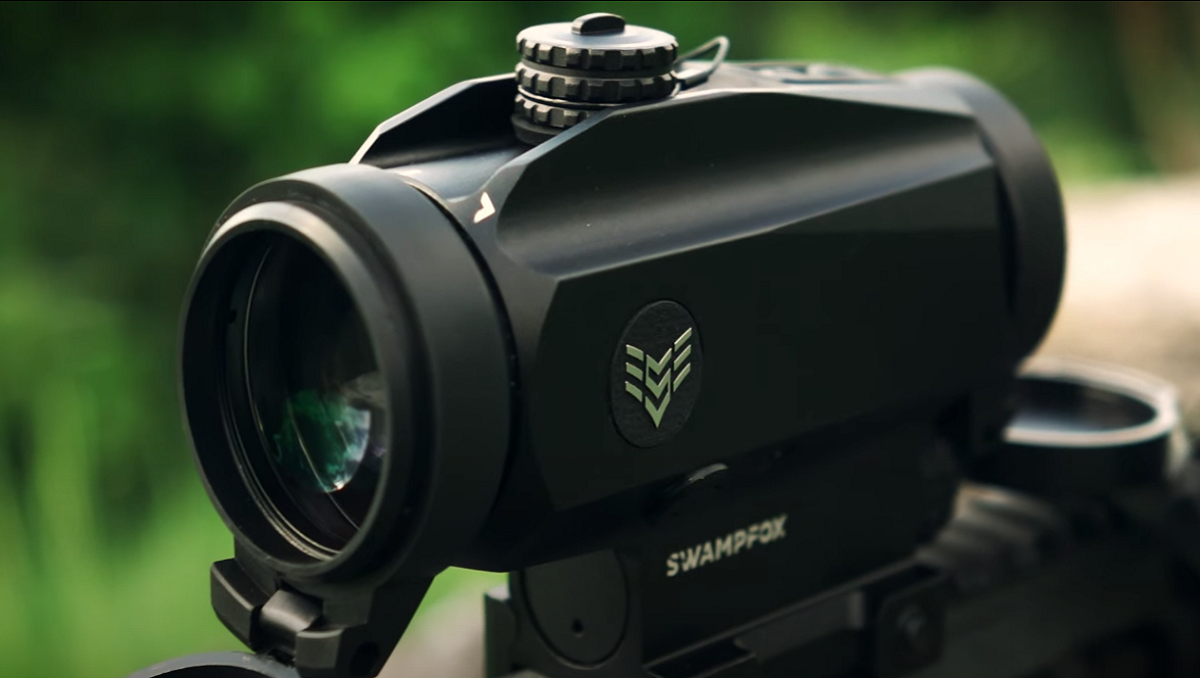
Getting into the basics of the Swampfox Trihawk, this is, of course, a fixed magnification prism optic, this one here is the 3x version hence the name Trihawk. The body itself is made out of 6061 T6 aluminum. As you can probably tell, it is a pretty large optic, so the weight on the optic, with the included mount that is integrated into the body of the optic, it is 15.6 ounces, which is definitely heavy, it’s anywhere from 5 to 7 ounces heavier than other comparable 3x prism optics, but we will get into the performance trade-off there.
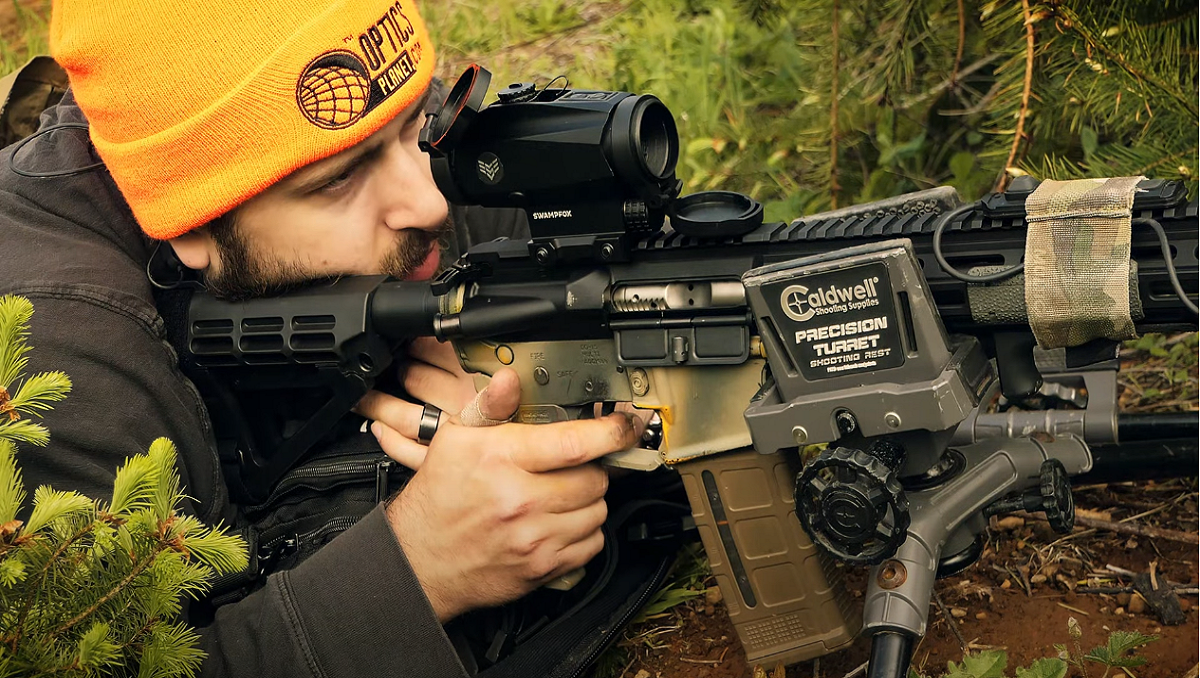
While the Trihawk is a large optic, sometimes the size is a little bit overstated, for instance, it is a very similar size to the SIG Romeo 7 or to the Vortex AMG UH-1, so while it is definitely a large optic it’s still not terribly huge and it is going to be much smaller and much lighter than a lot of other LPVO’s on the market, however, again, for a 3x fixed magnification prism optic it is a little bit on the heavy side, and that is going to be one of the main drawbacks, is the size and weight.
Wikiarms.com Search Engine Results
Want to see your products here? Click this
link.
See more results
for SIG Romeo 7 on Wikiarms.com
Powered by Wikiarms.com
Wikiarms.com Search Engine Results
Want to see your products here? Click this
link.
Product
Price
Store
MPN
UPC
PDX 300 Blackout AR-15 Pistol with Pelican 1525 Air Case and Vortex AMG UH-1 Gen II Sight
$3,099.99
Vance Outdoors
MXM-47822COMBO
000010577364
See more results
for Vortex AMG UH1 on Wikiarms.com
Powered by Wikiarms.com
Getting into the rest of the body itself, so we have an integrated one piece mount that is, again, just one piece with the entire body, it is powered by a single CR123A battery, which is forward-facing, which is quite nice. CR123A’s are fairly ubiquitous and easy to find.
The mount design itself is actually fairly good, so you have two decently-sized crossbolts that tread through. On top of that, on the bottom of the mount you have two integrated recoil lugs that butt up with the Picatinny on the top of your upper receiver. In theory, creating more contact surface and a better lock-up, better return to zero, better zero retention and all of those good things. Last couple things on the body of the optic itself, we do, of course, have capped windage and elevation, they are very nicely protected by these raised aluminum ridges to protect it from inadvertent drops or impacts or what have you.
The only two other controls on the optic are gonna be the forward arrow and the back arrow for adjusting your illumination. Speaking of illumination we have 10 total settings, eight daylight settings and two night vision settings.
This is the green BDC option, which we will get into the reticle later on, and the reticle is bright, it’s a lot brighter than other optics that I’ve seen on the market, however, it’s not quite like daylight bright, it’s more like daylight tinted, it’s definitely usable and in lower light or dusk scenarios you’re going to be able to appreciate that very high brightness without washing out the rest of the reticle, so it’s not really what I would consider to be daylight bright, but, again, we are dealing with an extra reticle, so during the daytime you really don’t need the illumination at all.
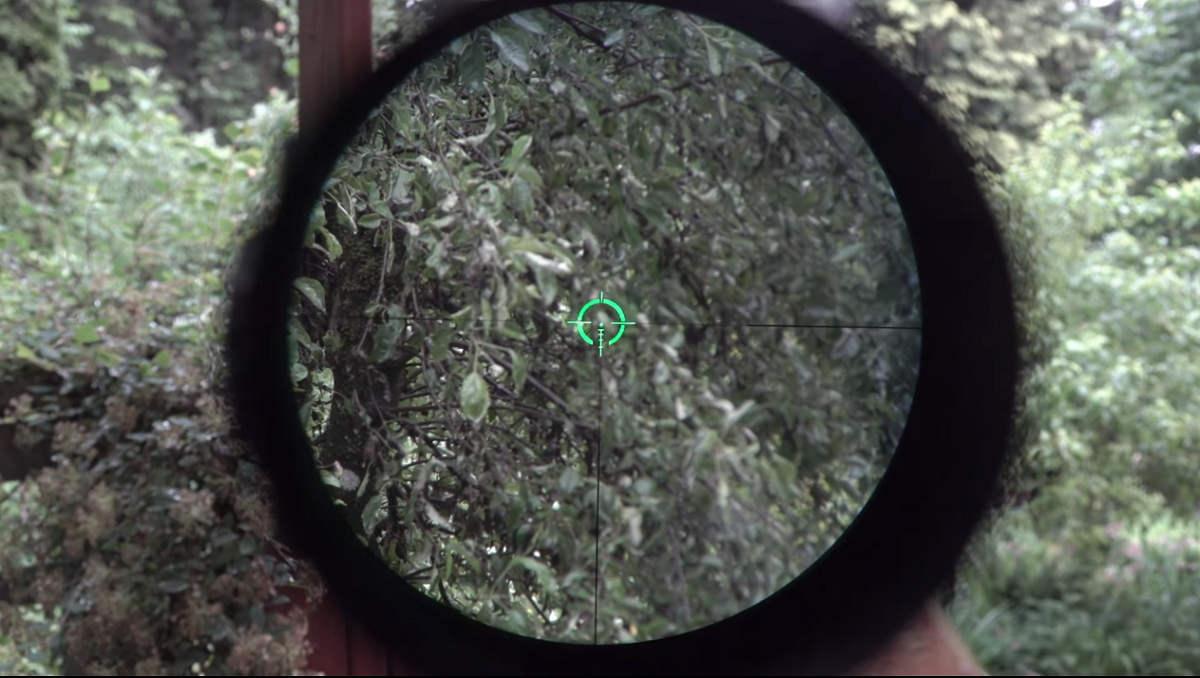
Getting into the main selling point of this optic for me personally is going to be the glass quality, the reticle and the field of view.
The field of view on the Swampfox Trihawk is 10 degrees. 10 degrees at 3x magnification equals out to 52 feet at 100 yards. That is substantial, I believe that is better than every single ACOG on the market. ACOG’s are well renowned for their field of view. This optic is basically better than every ACOG on the market, it’s better than the LK inspector. In fact, off the top of my head, I don’t know of any optic that has a better field of view that I’ve personally seen or tested than the Swampfox Trihawk.
That means when you get your eye behind the glass at 3x magnification you get a ton of information. Personally, when you’re dealing with a fixed magnification optic, the field of view is one of the most important factors when, you know, being able to acquire the targets, transition to targets and it helps you at every single distance. It’s not like an LPVO where even if it’s really tight at say four, five or six, you can just dial back, again, we are talking about a fixed magnification prism optic, and having that exceptional top-tier field of view is going to help you find targets, acquire targets or just take in as much information as possible.
On top of that, this is an overseas made optic made in China, and the glass quality is actually a step above some of the other Chinese optics that I’ve seen. I’m not sure what causes that, if that has something to do with the field of view or whatnot, but, again, it does seem to be noticeably better than other similarly manufactured 3x prisms, in fact, behind me you might be able to see a certain Primary Arms micro 3x prism and the old style 3x prism and the Vortex HD 5x prism, and I can say that the Swampfox Trihawk does have an edge in terms of clarity and brightness over all of those optics that are, again, a similar to higher price category, and, again, I’m not sure why that is, I’m not an optometrist, I don’t understand what is going on within the glass, I just know that to my eyes it’s a little bit crisper and it’s a little bit brighter, on top of the fact that it has a humongous field of view.
Wikiarms.com Search Engine Results
Want to see your products here? Click this
link.
Product
Price
Store
MPN
UPC
Walther PDP Compact w/ Primary Arms Optic
$579.99
KyGunCo
PDPCPA-USED
-
USED Glock 43X MOS 9mm – Primary Arms Optic, Night Sights, 2 Magazines & Case
$599.00
Gunprime
PX4350201FRMOS
764503046629
See more results
for Primary Arms Optics on Wikiarms.com
Powered by Wikiarms.com
This also has a fairly large 30 millimeter objective lens, which is going to be trapping a lot of light, especially in this small or compact prism style of optic, so it’s hard to describe what it’s like looking through it because, again, it does have just an insane field of view, it looks really good, it means that it’s much more usable, up-close, say in between like 15 and 50 yards, whereas with a tighter field of view optic you might not be able to see multiple targets at the same time within the glass. With this huge field of view you are absolutely able to do that, making your transitions cleaner, smoother, faster.
You can always use the bindon aiming concept in super, super close range, so it doesn’t really help you all that much there, but in kind of those close to intermediate distances the exceptional field of view really does help out me personally, when I’m transitioning from target to target because, again, I can transition within the glass as opposed to having to look outside of the optic, find the target, adjust the optic to the target, so on and so forth.
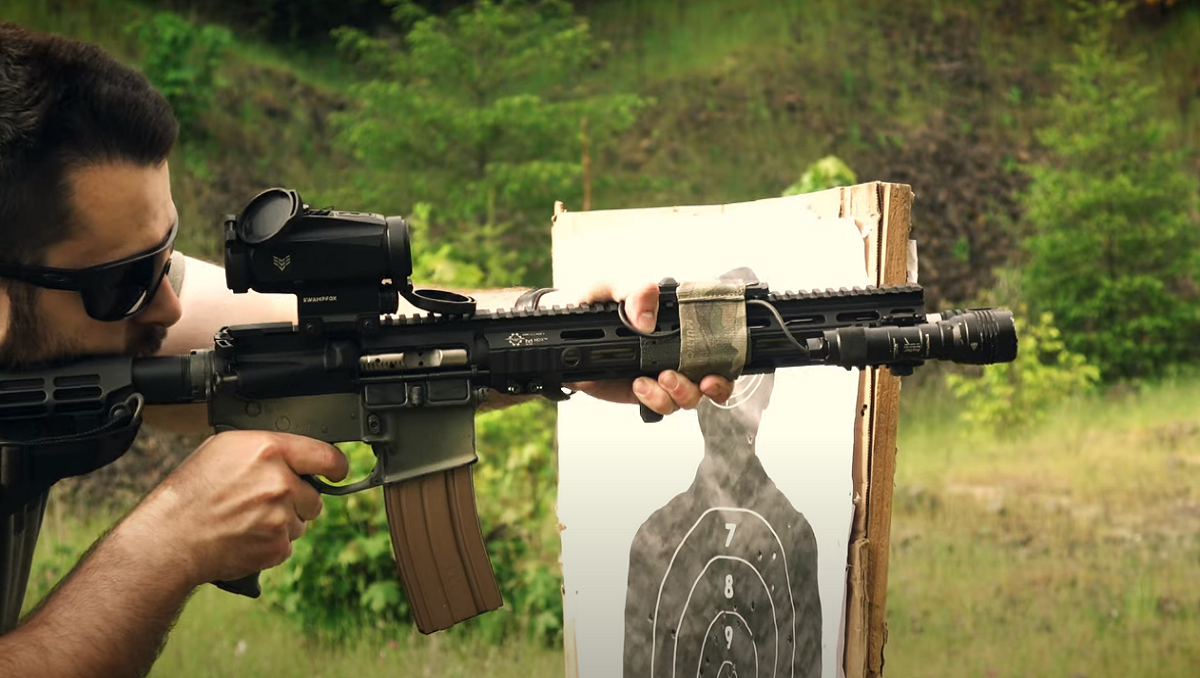
All of that is great, but how do they achieve such a exceptional field of view, and the way that they do that is partly the byproduct of that exceptional field of view, is by shortening the eye relief. They state the eye relief is exactly 2.36 inches, on their website, and they’re pretty darn close, it is a very short eye relief, it’s not quite as bad as like, old ACOG’s and such where it’s literally an inch and a half, like it’s literally your eyeball is right behind the glass. It is a little bit better than that, but for appropriate eye relief you’re right about here.
So, usually when I’m using this optic I will take my stock, or in this case brace, and mark it almost all the way in, maybe one or two clicks back, so that I can have my head in a normal position, and still get a perfect eye relief.
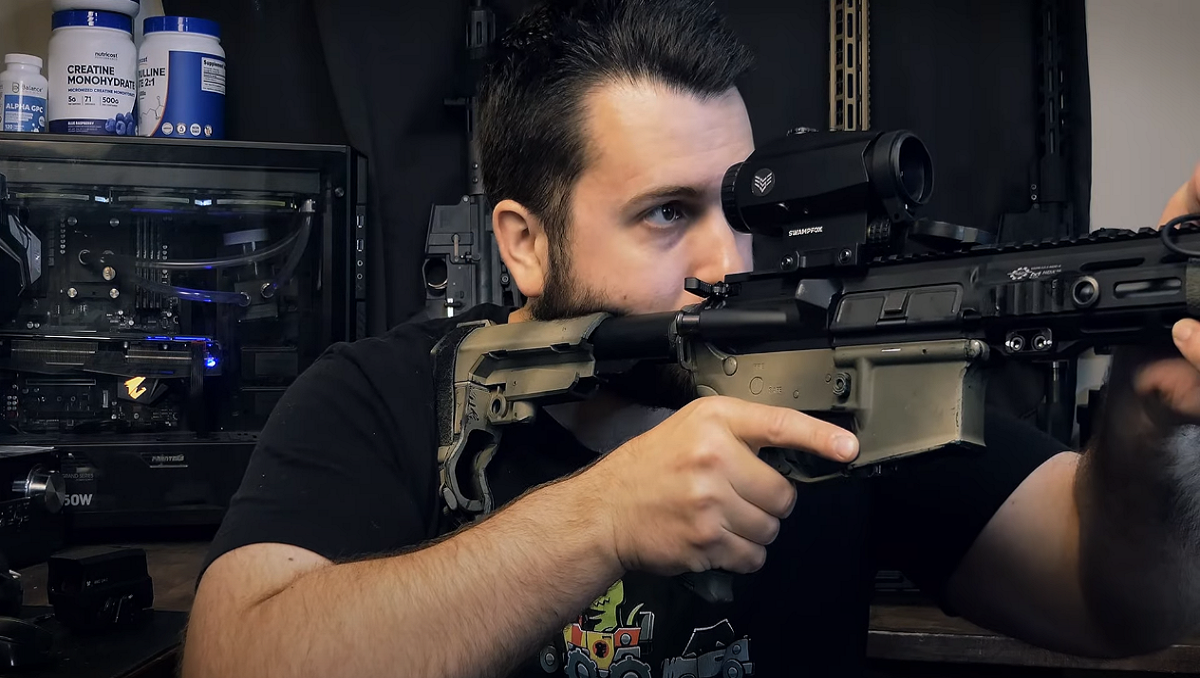
The eye box itself, which is your up down left and right, is also pretty tight, so the drawback or the downside, the flip side of that exceptional field of view is you are dealing with a tight eye box and a short eye relief, which will make you adjust how you shoot it, for instance if you just always have your stock, you know, A1, A2 stocks, all the way maxed out, the Trihawk is gonna be kind of hard to get the optimum eye relief on it because you’re gonna be mounting it all the way back on your receiver and then craning your head all the way forward to get the best eye relief that you can.
In certain circumstances on positional shooting or what have you, that can definitely be a detriment and so what I would recommend running with this optic is some sort offset either offset irons or preferably an offset red dot to allow you to take those closer range shots or awkward angle shots a little bit easier because, again, it is a little bit harder to get the perfect eye relief in more awkward shooting scenarios, again, whatever you can craft up in your head or in real world practice, you will notice that in certain circumstances it is more difficult to get the optimum eye relief.

The last thing that we need to talk about in this specific model is going to be the reticle. The reticle in this specific model is the green BDC or ballistic drop calculation reticle, so basically it is tuned for, I believe, 14.5, 16-inch barrels, and 55 grain or 62 grain ammunition, fairly standard military ball ammo.
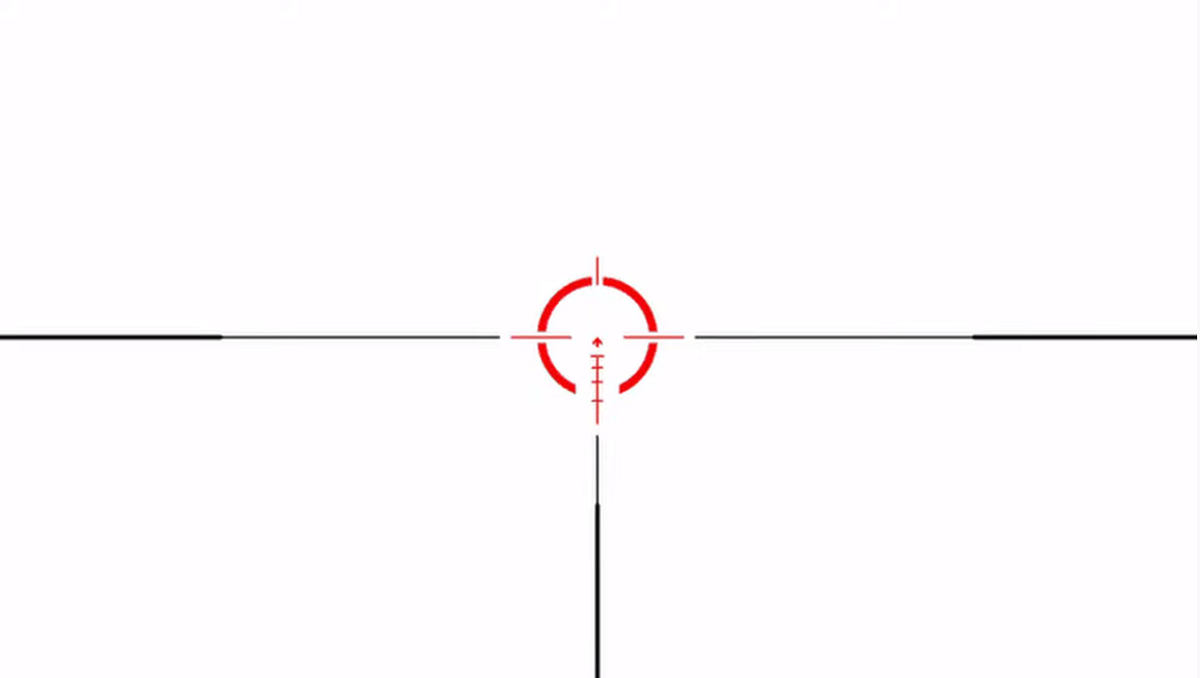
BDC’s are almost always going to needed to be calibrated to your specific barrel and your ammunition choice. In this case I was using, this is a Rosco Purebred 13.7, and this is… I was using actually just really crappy steel case ammunition out to 500 yards, and even with crappy steel KC ammunition and a little bit shorter barrel the BDC lined up fairly well, not perfectly, but fairly well, but, again, once you figured out where it should be and you translate it to your specific barrel and ammo, you’re gonna be just fine.
Wikiarms.com Search Engine Results
Want to see your products here? Click this
link.
Powered by Wikiarms.com
In the center of the reticle you have a very nice arrow, kind of like the ACSS Chevron, but in this case it’s an arrow. The arrow itself at the tip you want to zero at 50 yards and that should get you pretty close to 50 and 200, then you use the bottom of the arrow for 300 and then you have your BDC lines, four, five, six, seven, and then all the way at the bottom of the reticle is 800 yards.
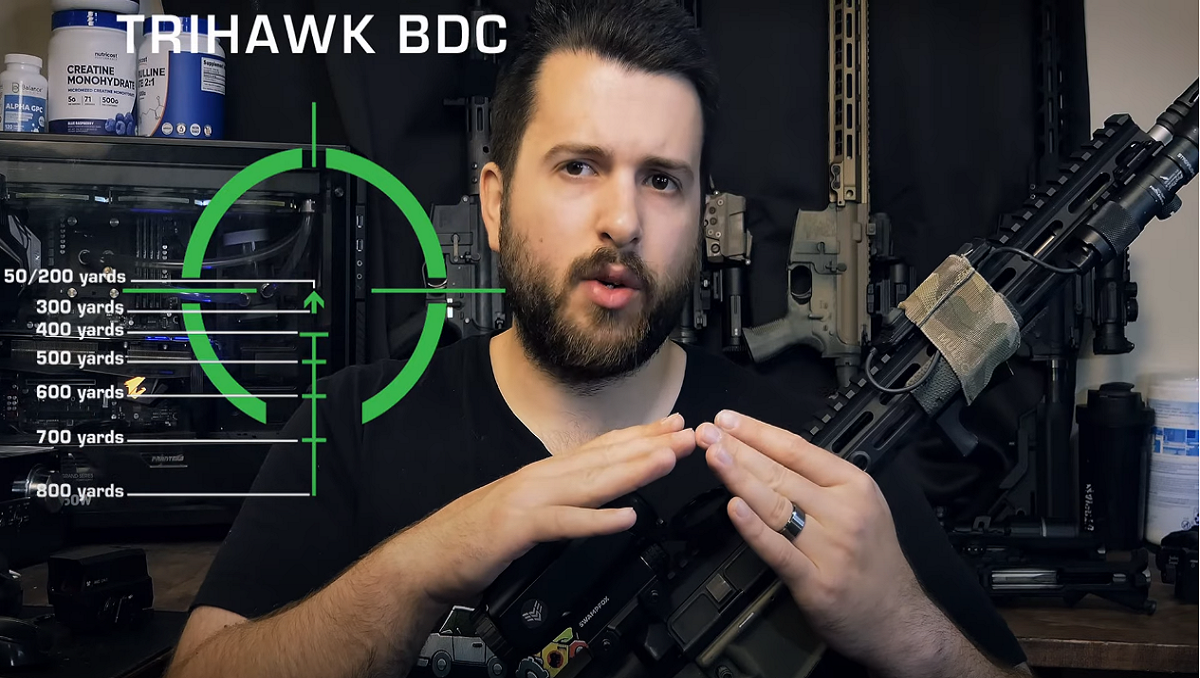
800 yards with a 3x prism, not the easiest shot in the world, not undoable, but it is a more difficult shot, especially for the average shooter. Personally, this is really gonna excel inside of 400 yards and then be usable out to say 500 or 600 yards, depending on your ammunition and personal skill level as well.
It also has a kind of outer horseshoe for speed shooting, which we did do some speed shooting with it and, again, speed shooting with a 3x prism is not always the easiest thing, however, with the exceptional field of view on the Trihawk it is definitely a lot easier than other prisms that I’ve used and we have, again, tested a lot of them and we will be bringing you a lot prism videos very shortly, but the Trihawk does have an edge over all of them in terms of its field of view, making it easier to use inside of that 15 to 50-yard window where you can see multiple targets in the glass at the same time, makes it a little bit easier and faster on transitions, at least in my personal experience.
So, to sum it all up, what we have here is a decent reticle, it’s not quite feature-packed like the ACSS reticles are and so it is going to fall behind a little bit there, but for more simple shooting or less if you don’t need all the features on an ACSS reticle, although the ACSS reticles are very good and, again, I would say better that the BDC in here. The BDC is simple, usable, it does work, but, again, it’s nothing particularly special.
We have a decent reticle, very good glass, especially for the money, in the price category that it’s in, and an exceptional field of view. That combined makes a very good, very usable prism optic, but it’s held back by its large size, its heavy weight and its short eye relief, so it is not a perfect optic and it definitely does make sacrifices to achieve that very good field of view, and it’s up to you whether or not that’s worth it for you.
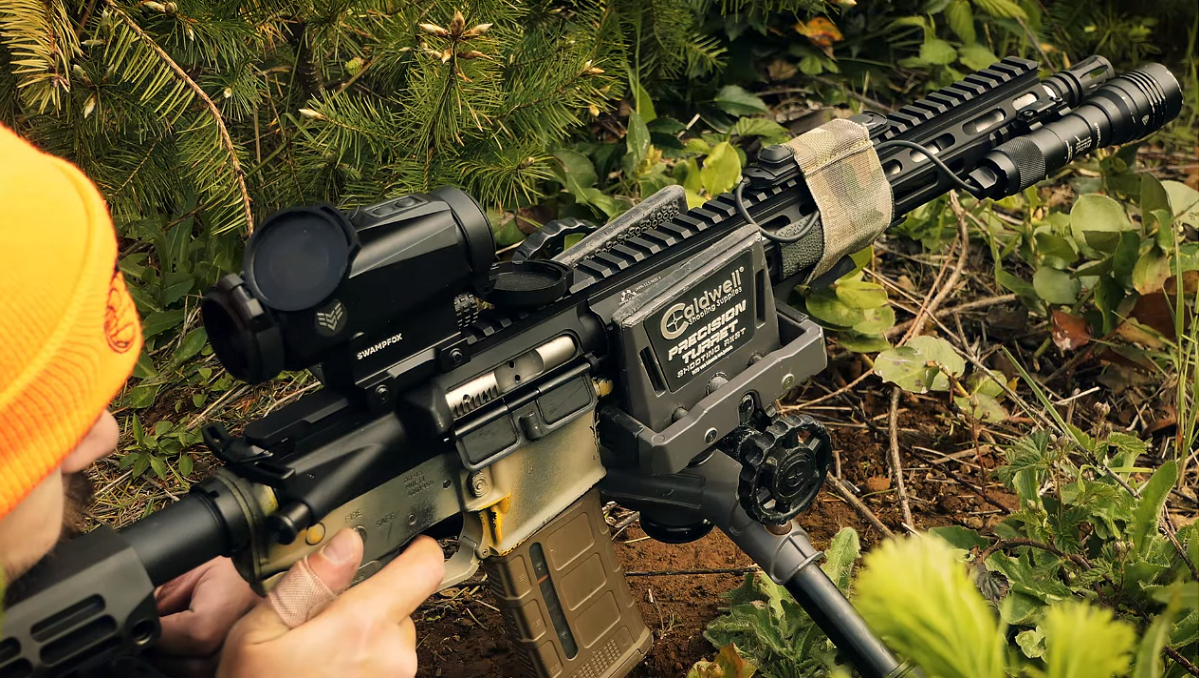
For me personally, this is still one of my favorite prisms to use and this is why I wanted to re-review it for gun.deals, is because I really like using the optic, it has really good glass and an exceptional field of view, which makes it one of the most pleasurable 3x prisms to use on the market. Personally, I’m a big fan of LPVO’s because you can always dial it back to 1x for your speed shooting, up-close, fast acquisition, what have you, on this 3x prism, while it is a fixed magnification with the insane field of view, you really don’t need to dial it back and you can, of course, always offset that with a red dot and have a very, very fast, very versatile setup on your gun.
So, at the end of the day I am a big fan of the Swampfox Trihawk, I think they did a very good job overall with it. It does definitely have some downsides that you need to be aware of, and kind of base your buying decision off of that.
Swampfox is also coming out with a 5x version, theoretically soon, I know that everything’s kind of being delayed and pushed back recently, but they are theoretically coming out with a 5x version with the same 10 degree field of view and that should be an amazing optic.