
Primary Arms GLX 2.5-10x (ACSS Griffin Mil) - Designed for Mid Range Performance
Updated
50 months ago
Good morning everyone, this is John with gun.deals and today we’re gonna be taking a look at the Primary Arms GLX 2.5-10.
Full disclosure on the Primary Arms GLX 2.5-10 is that this was actually sent out to me personally by DAT at Primary Arms. He’s their social media manager or their, you know, social media relations manager, what have you, I forget his exact job title, anyway, he sent this scope out to me for review, so I’m doing a video for on the gun.deals channel and then eventually at a later point in time I’ll do one on my personal channel as well.
Wikiarms.com Search Engine Results
Want to see your products here? Click this
link.
 Powered by Wikiarms.com
The scope and the mount that we’re gonna be talking about today were sent out by Primary Arms and I did not pay for them whatsoever.
Now, with all that out of the way, let’s go ahead and get into the specifications on this PA GLX 2.5-10.
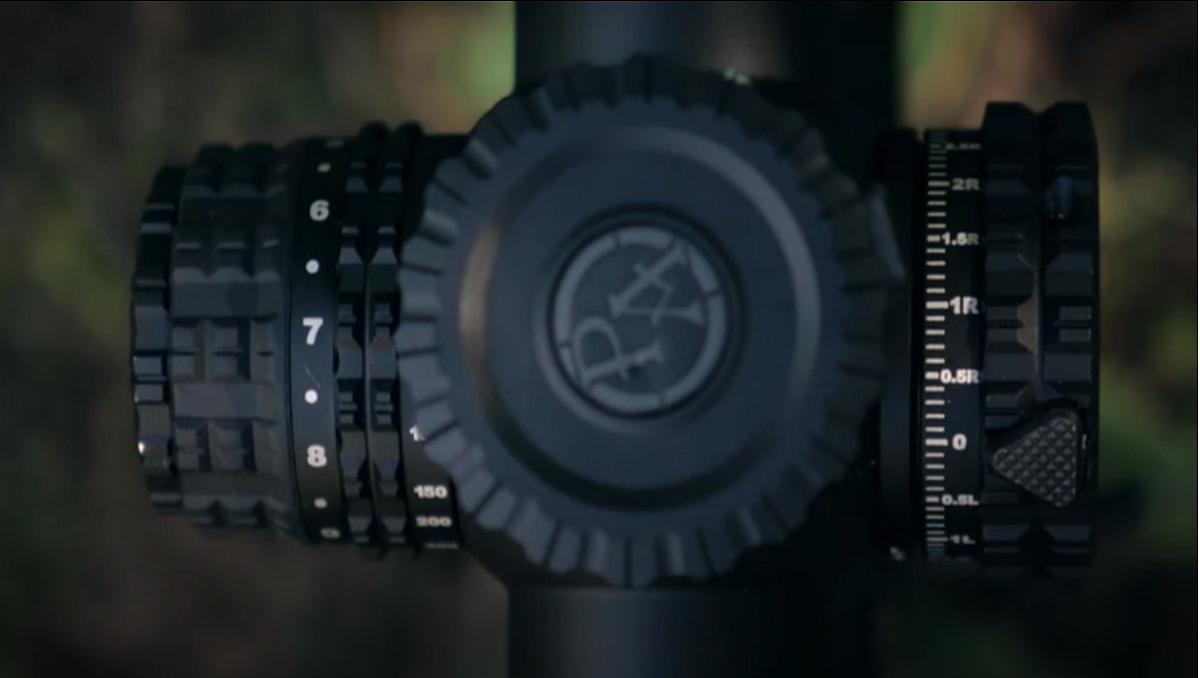
This is, of course, the Primary Arms GLX 2.5-10 by 44 first focal plane rifle scope. This one specifically comes with the ACSS Griffin MIL dot reticle. We’ll get into the reticle a little bit later on, but it is specifically the one that I requested for some nice attributes that it has at mid-range.
Wikiarms.com Search Engine Results
Want to see your products here? Click this
link.
Powered by Wikiarms.com
The base magnification 2.5-10, first focal plane that is going to be a very good magnification in sort of that mid-range environment, say in between 100 and say 700 yards, you’re gonna be able to get a lot of performance out of this scope. The body itself is a singular piece of 6061-T6 aluminum. The overall length and weight on the optic is 12.5 inches and just over 22 ounces, which for kind of a special purpose rifle scope, if you will, is not that bad, it’s definitely not a heavyweight, there are a lot heavier optics on the market and I feel that 2.5-10 does do a good job and, again, those kind of mid-range environments.
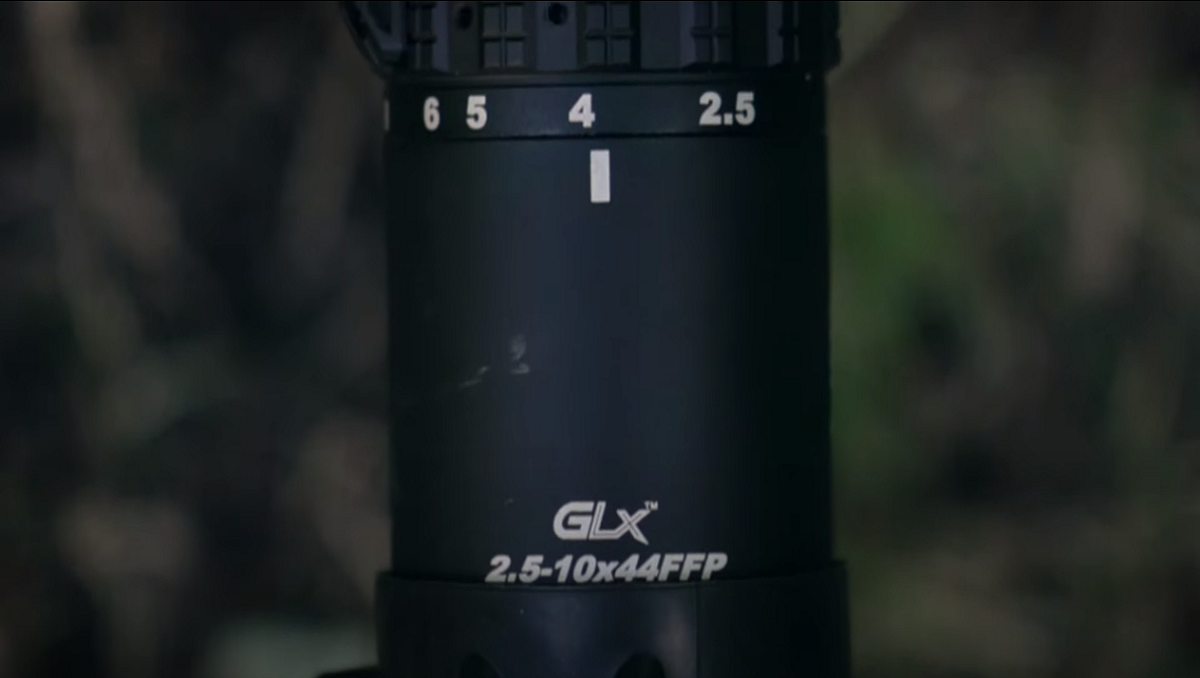
For those of you who don’t know, Primary Arms has three different optic lines. Basically, they have their SLX, which is their silver series. They have their GLX, which is their gold line, which is what this optic is, but then they have their top tier platinum line which is their PLX.
The SLX, almost all of those are manufactured in China, the GLX is manufactured in the Philippines, for the most part, and then the PLX is usually Japanese glass, which is, of course, gonna be the highest quality.
The main selling point for me on this optic is a combination of things, so you have the GLX glass, which is gonna be a lot better than your budget tiered scopes. Basically anything under 500 bucks is going to have the same sort of quality of Chinese glass which is decent quality and can definitely get the job done, but when you step up to the Philippines and to Japanese glass, especially on the top end, you get a lot more crisp, a lot more clarity of glass, and you’re gonna get, you know, a better picture, especially when you’re looking at extended distances.
This being a more mid-range focus scope, something that I personally am gonna be using between 2 and 600 yards and possibly out to 700 yards, though, again, this is definitely more of a mid-range not quite a long-range application scope, and this one here has extremely nice turrets. These are steel on steel locking turrets so you have a detent that you press down to rotate, and then, of course, they will lock in place so that they don’t accidentally rotate on you.
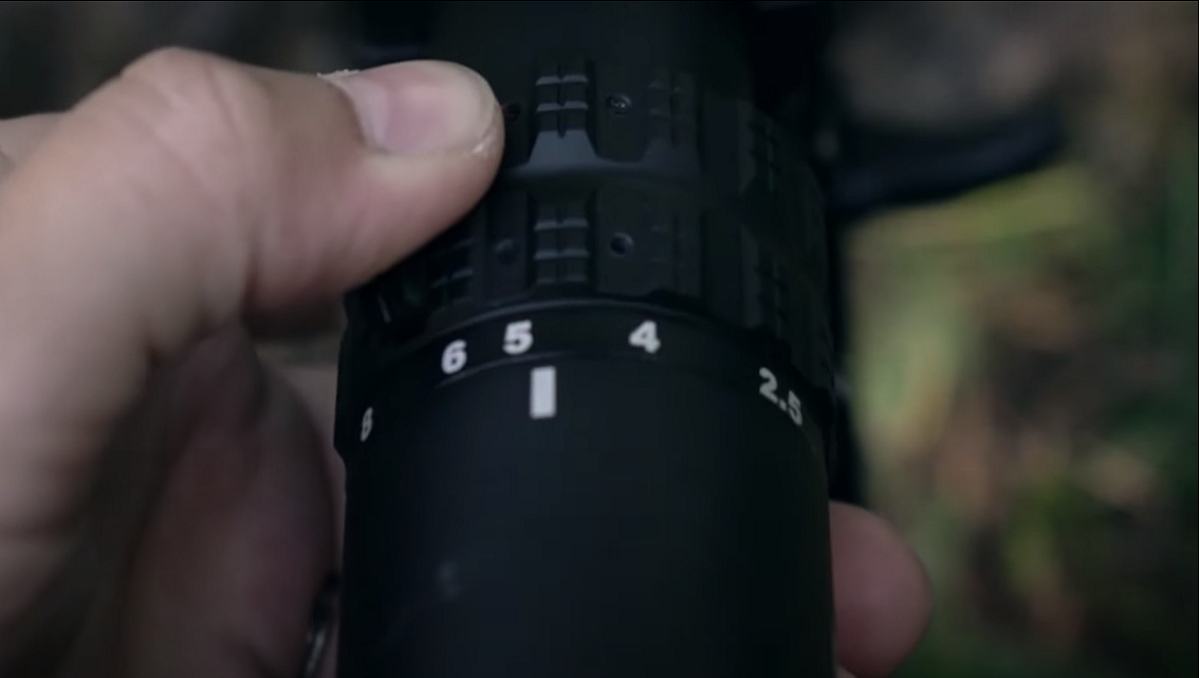
Getting into the controls on the scope itself, we, of course, have our magnification ring, which is very nicely knurled and it actually has this fin, which is not quite an extended throw lever but it is definitely raised ridge and it’s definitely removable if you don’t like it, and you can actually move it around to a few different spots to kind of make it work for you whether you’re right or left-handed or, again, where you like to have it set on the magnification ring itself.
The machining work is done quite well, it is very smooth, it has the right amount of force, it is definitely not difficult, but it does, again, have that little bit of resistance to it. We do, of course, have our windage and elevation which are, again, very nice clicks. You do, of course, have, these are zero resettable as well as they also have a zero stop, I believe, so when you rotate this one here all the way down it will actually stop in place and you get like a half mill underneath your zero stop if you ever needed to dial under for any reason. The windage is also the same, feels very, very nice.
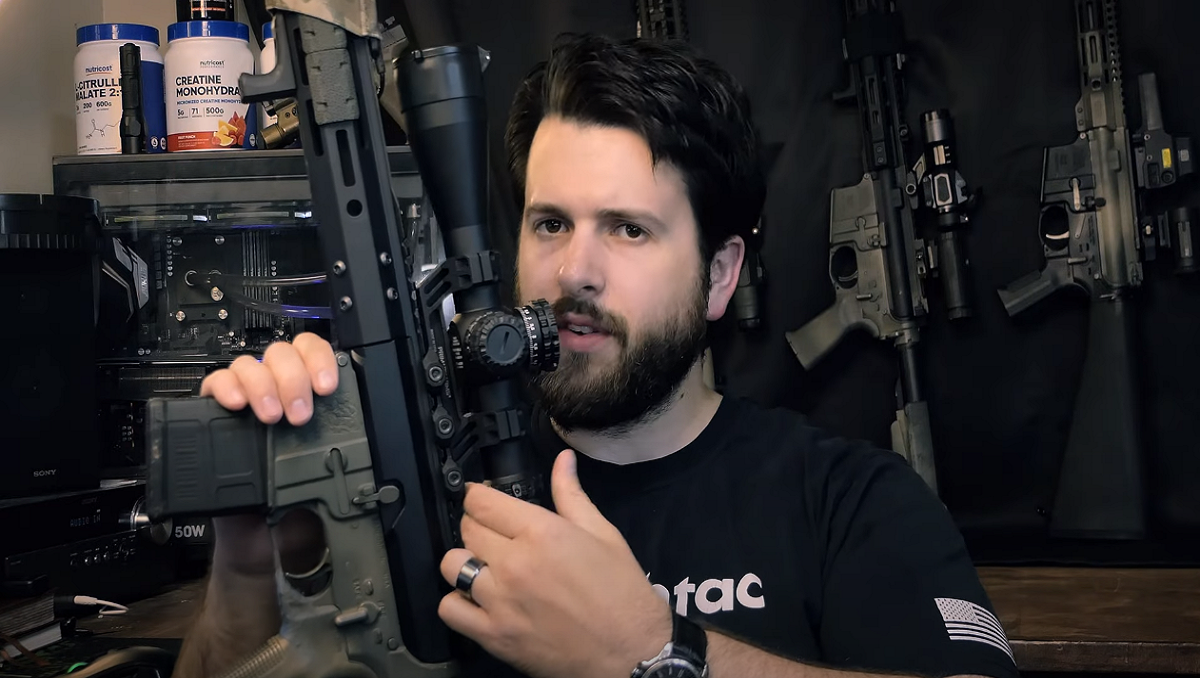
On the left hand side of the scope body we have our illumination dial which goes from, I believe, 1 to 10 which is just fine. The illumination on maximum is very dim during the daylight, but you don’t need it during the day, the reticle is definitely large enough to do its job without illumination and it’s there for that, you know, dusk or nighttime application where you actually need it.
Very nicely on the GLX line of scopes, this one in particular has the Autoliv technology so that means even if I were to leave this on 10, its maximum brightness, after a certain amount of time of not moving the illumination itself will actually turn off.
Battery life on, large style optics like this usually is very poor, it’s not like LED based emitters on red dots, usually you’re looking at something like 20 to 200 hours, again, depending on the optic, but on this one here with the Autoliv technology, it’s going to extend that out, so instead of dying after say 6, 7, 8 hours out on the range, in real world circumstances, if you’re not moving and shooting with it the entire time, it’s going to help to save and extend that battery life and, again, battery life on this style of optic is generally very poor.
On the inside ring of that we actually have our focus or our parallax adjustment which goes from all the way down from 25 yards all the way out to infinity.
With a 10x top end magnification on the scope you could definitely take it out further than 600 yards, like I’ve said, you could take it out to 7, 800, 900, 1000 yards, no problem. For me personally though, at those extended distances, I would like to have more magnification.
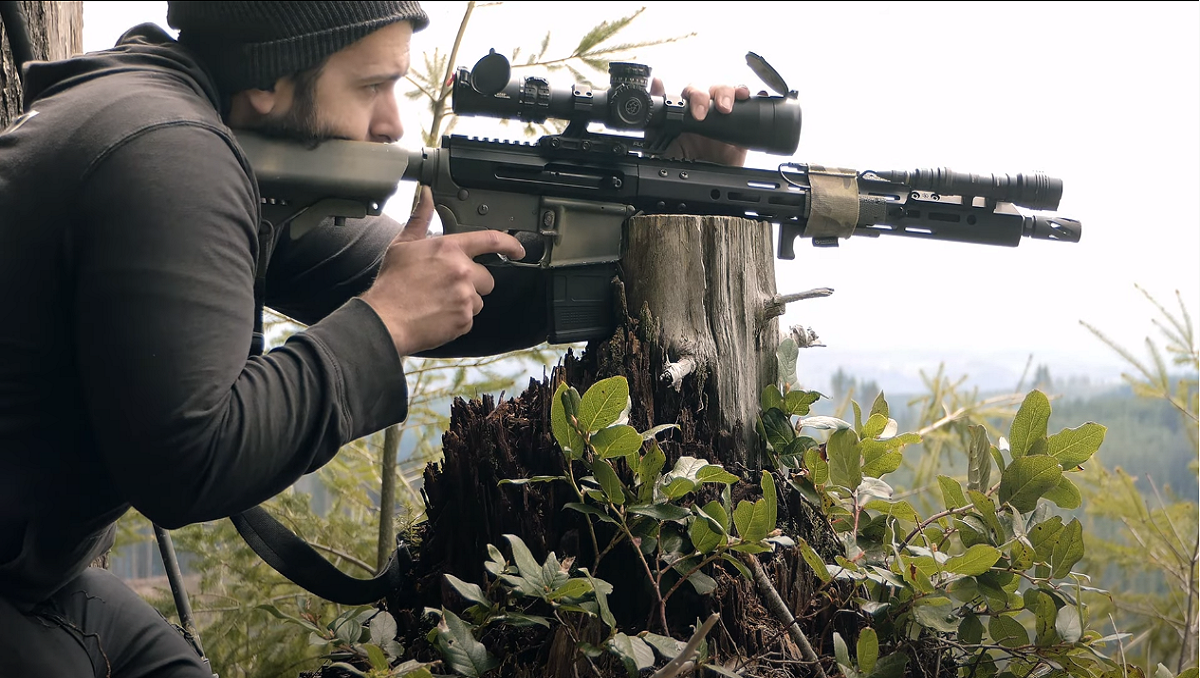
This scope fits perfectly for where I live, if I needed something that was able to stretch out a little bit further. I live in Western Washington where it is very hard to concoct a shot larger than 700 yards, in fact, when we took this out shooting a couple of days ago, 700 yards was the furthest I had ever shot up until that point.
While this is definitely doable, and on man-sized targets it’s not gonna be too hard. When we’re starting to talk about reduced-sized targets at extended distances, 700, 800, 900 yards, it is going to start to fall behind certain other reticles and other scopes that just have higher magnification. Now, again, for me personally, inside that 600-yard zone, this is a very, very good performer.
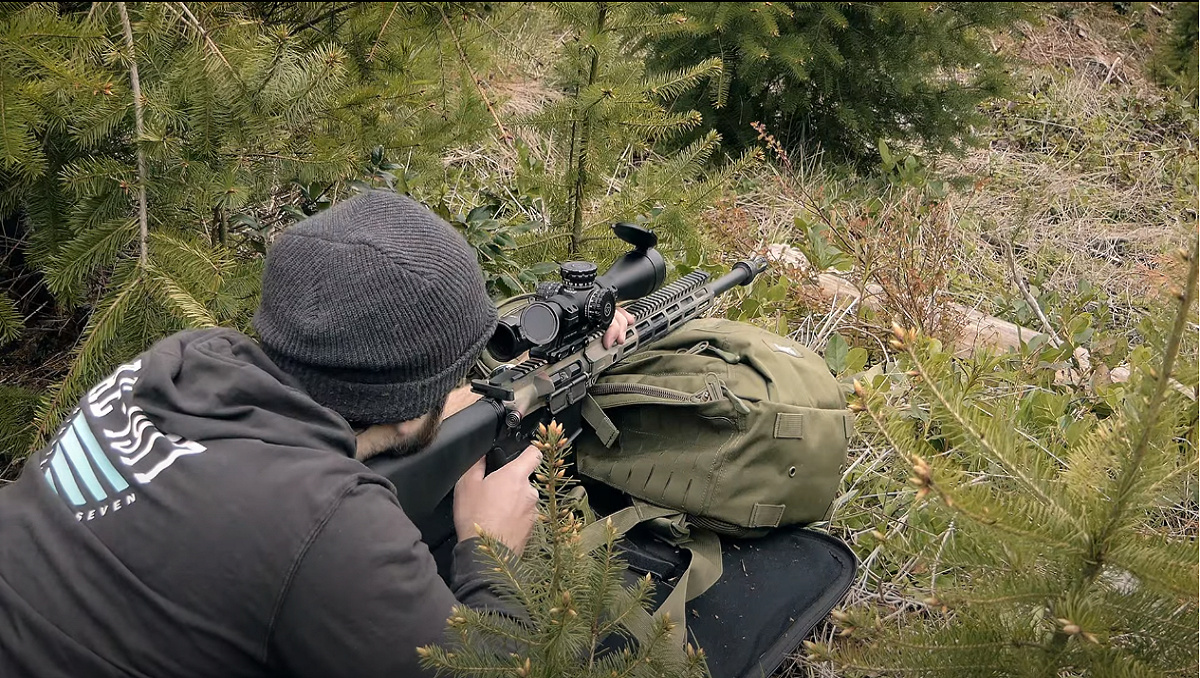
Getting into the reticle and the glass because, of course, these two things are gonna be very, very important and how well they work together. The glass itself is crisp, it’s clear, it’s bright, it’s definitely a step up from your average Chinese glass, which is nice, it’s a nice thing to see. It’s not the best glass I’ve ever seen, but it’s definitely very good and very usable and, again, at those extended distances, 4, 5, 600 yards and mixed ligthing conditions having better glass in the GLX line of optics is gonna be more beneficial than if you’re using cheaper Chinese glass.
So, even if you have say 4 to 16, you have more top end magnification, but it’s less crisp, it’s more fuzzy, it doesn’t quite cut through the same way, you know, different lighting conditions and whatnot. The glass on here can actually provide you a good benefit even though, again, you don’t have that huge top end magnification.
The glass isn’t like phenomenal, but it is, again, very good and a step up from other more budget tiered scopes because, again, this scope, if you don’t know, comes in at around 750$ which is not what I personally consider a cheap scope, some people might consider this a cheap scope, I definitely don’t. For me, a budget mid-range scope is anywhere from like 250 to 500 bucks and this is definitely a step up in terms of price and fortunately in terms of features as well.
Oh, nice!
Can’t tell where you hot, but you hit.
Another one, yeah?
Yep, another one.
Getting into eye relief and eye box on the scope itself, this is something that they kind of underrate. They claim it only has 2.7 to 2.8 inches of eye relief and that is not quite accurate. On 10x magnification I would say it has much closer to about 3 inches of eye relief and then on 2.5, you know, you can stretch it out quite a bit.
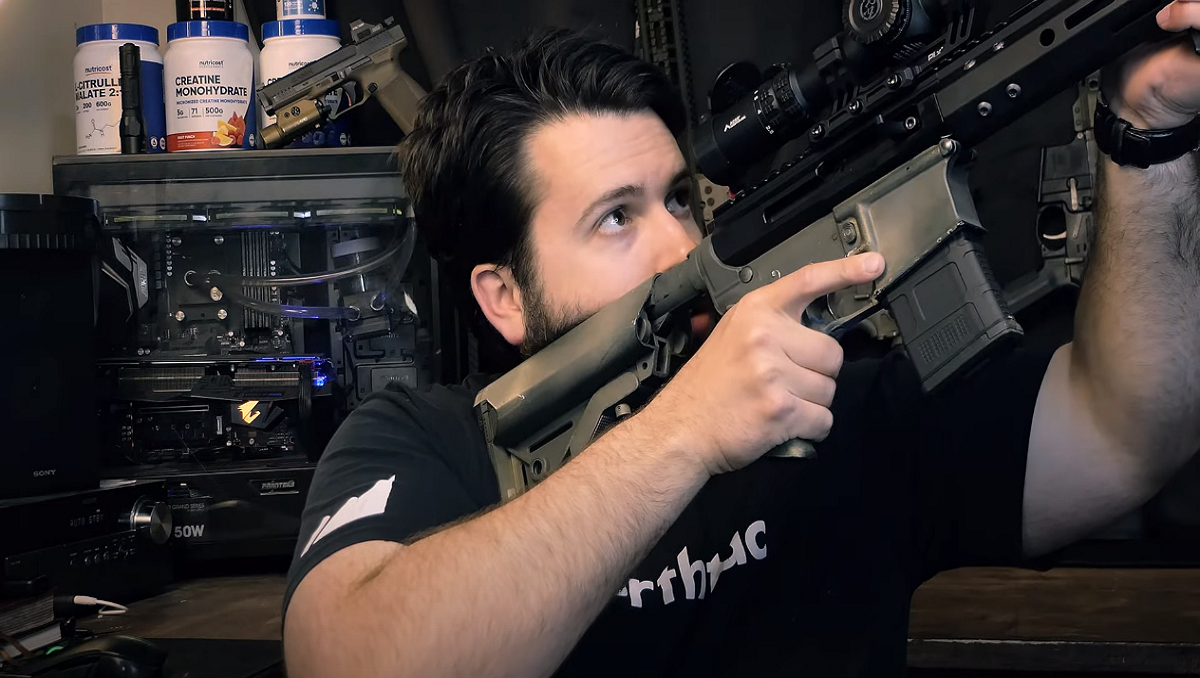
Depending on your magnification that you’re at you’re gonna be getting somewhere between 2.5 and 4 inches of eye relief which is gonna be very forgiving, especially like an AR-15 platform with an adjustable stock, it’s gonna be more than forgiving enough.
Eye box is a little bit tight, but that’s just kind of par for the course here, it’s not gonna be like a LPVO on 1x, it’s gonna be a little bit tighter than that, of course, but, again, it’s still definitely usable, we were shooting it, again, about 600 yards plus in some circumstances from odd positions braced off of stumps and we were still able to use of the scope just fine.
That was a hit!?
Yeah, the lower portion of it.
One area where this scope is definitely lacking for me and I am gonna knock it for is in the field of view. The field of view at the low end at 2.5x magnification is only 35 feet which is pretty poor. That’s worse than a lot of 3 and some 4x optics, so the field of view, which is very important, we’re talking about a magnifier optic, the field of view is very diminutive and that’s gonna translate as well as when you get up to a higher magnification. At 10x you only have 10 feet of field of view at 100 yards, and, again, that’s getting very, very tight.
I like fade field of view, especially on magnified optics because when I’m at that higher magnification I want to get more of that image basically, so I would like to see more of that magnified image because, of course, that’s what I’m using a magnified scope for and if I can see more at any given magnification I’m gonna be able to take in more information on my surroundings while being inside of the glass. Don’t get me wrong, it’s definitely still usable, but it is what I consider to be sub-par.
Getting into the reticle, this is, of course, a first focal plane reticle, this is the ACSS Griffin MIL reticle. This works extremely well with that 2.5-10 first focal plane optic design and so we’ll go ahead and get into it because there is a lot of stuff going on inside of the reticle.
At first glance at 2.5x magnification we have what looks to be a two-thirds horseshoe design which helps to, you know, be fast for acquisition and to draw our eye in the center and then, of course, we have a very fine, very precise Chevron reticle which is kind of a feature of all the ACSS reticles and at the lower magnification it does just that, it works very well as a quick acquisition reticle and is still precise enough to take shots at longer distances without having to try to fumble and dial up on the magnification.
Wikiarms.com Search Engine Results
Want to see your products here? Click this
link.
Powered by Wikiarms.com
When we do dial up to our higher magnifications, of course, we expose more of what’s going on with the reticle and there is quite a bit here, so we still have a very precise center Chevron reticle, which, if you use the tip for dialing with the very nice turrets that are here on the GLX optic, you still get a very crisp, very precise aiming point, again, if you’re planning on dialing.
If you’re not planning on dialing we have a very nice one by one mil grid. Now, mils, if you’re not familiar with mils versus MOA, I believe every mil is equivalent to 3.18 MOA, so think of it like a three by three MOA if you’re used to thinking in MOA.

The mil grid is very important for me for spotting misses at longer distances, basically say I dial up to a target at say unknown distance, I think it’s 500 and it’s actually 600 yards, I pull the trigger and I spot the impact bottom right mil grid. I can just use that mil grid, whatever it happened to land within that mil grid and use the reticle to adjust the target for a very quick follow up shot.,/p>

That’s in an ideal circumstance where you are actually able to spot your misses, in a real world it’s often a lot more difficult to spot where you round actually went if you missed the target.
Another advantage of having a mil grid style of reticle is that you don’t have to dial at all. If you know your distance and you know your drop and the wind call, you can easily translate that into the mil grid.
The mil grid itself is not crazy precise, it is a one by one mil grid so at say smaller targets at extended distances, say like a 10-inch plate at 600 or 700 yards, it’s not gonna be precise enough in that mil grid to precisely put it exactly where you want it, you’re still gonna be doing some holds and some Kentucky windage within the mil grid itself, but it does still give you a very good reference and, again, if we’re shooting at larger targets, man-size targets if you will, that one by one mil grid reticle works very, very well out to 6, 7, 800 yards.
Again, if you’re doing more of PRS style of shooting, where it’s smaller targets at very extended distances, you know, 1, 2 MOA targets at extended distances, that’s where this less precise mil grid where it’s definitely less busy than other reticles but it is also a little bit less precise as well, it can be a little bit harder to use on smaller targets at extended distances.
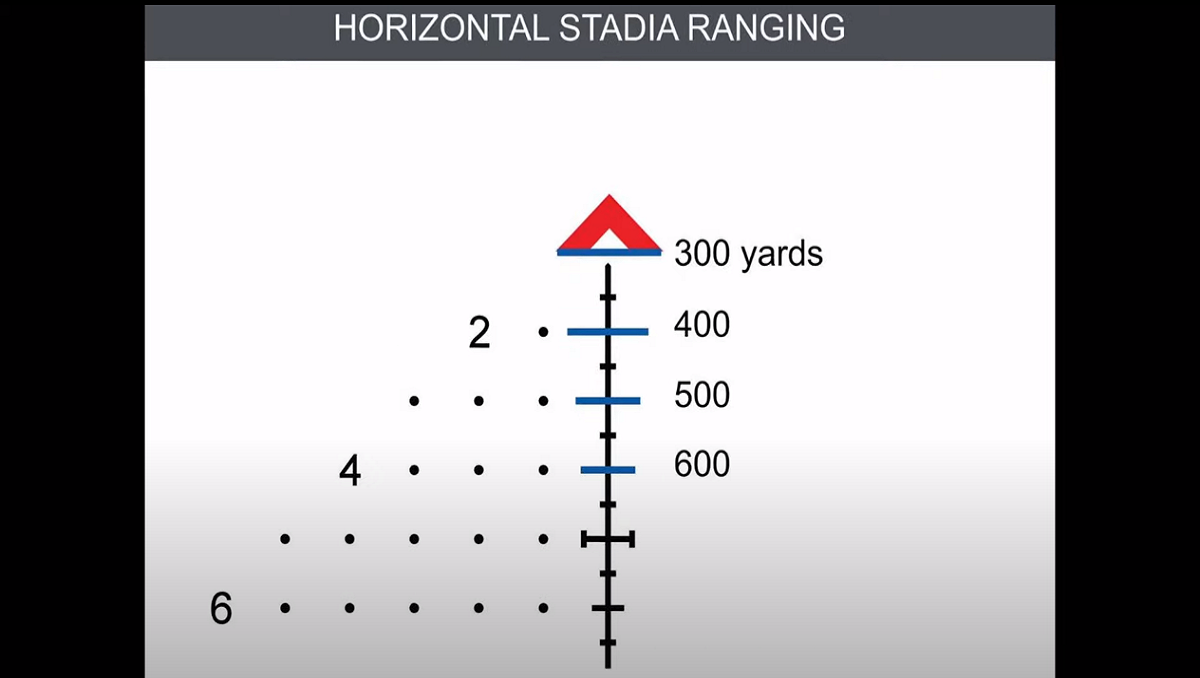
Fortunately, the reticle still has a few more tricks up its sleeve if you will, the center stadia line also works as a raging feature so it has shoulder height ranging at 800 yards and then on either side of the horseshoe you have both horizontal and vertical ranging out to 800 yards on man-sized targets.
On top of that, the center Chevron itself is also a ranging feature, I believe that should slot perfectly in between the human shoulders at 100 yards or 200 yards I believe, and then you can, of course, range off of that at further distances as well, if they fill up half their Chevron then it’s 200 or 400 yards, so on and so forth.
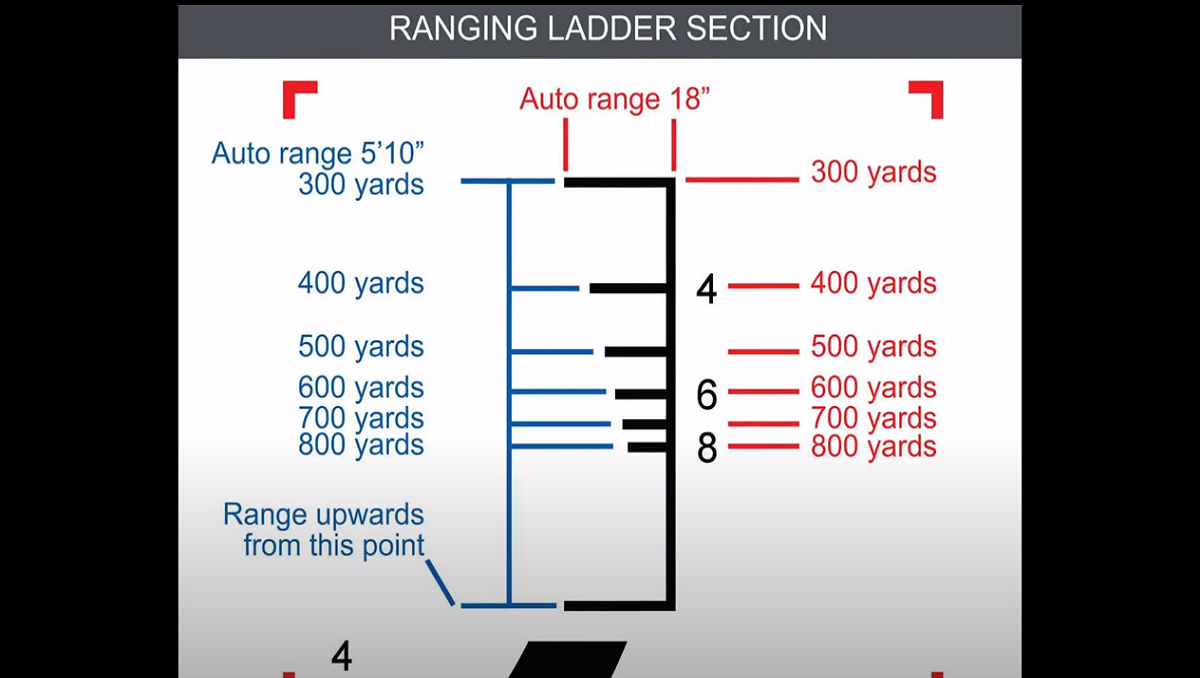
On either side of center Chevron you also have mover holds. I believe those are set up for eight miles an hour, which is what the average soldier runs with full kit on, you know, full speed is about eight miles an hour at 100 yards and I’m sure you could extrapolate that to other speeds and distances as well if you are a much more talented marksman than I am.
Basically, the reticle gives you enough precision, again, especially more than enough in that sort of mid-range envelope, you know, out to say 6 or 700 yards on full-sized targets and it also gives you a ton of ranging features, fast acquisition features as well as precision features if you like to dial and use the very tip of that center Chevron.
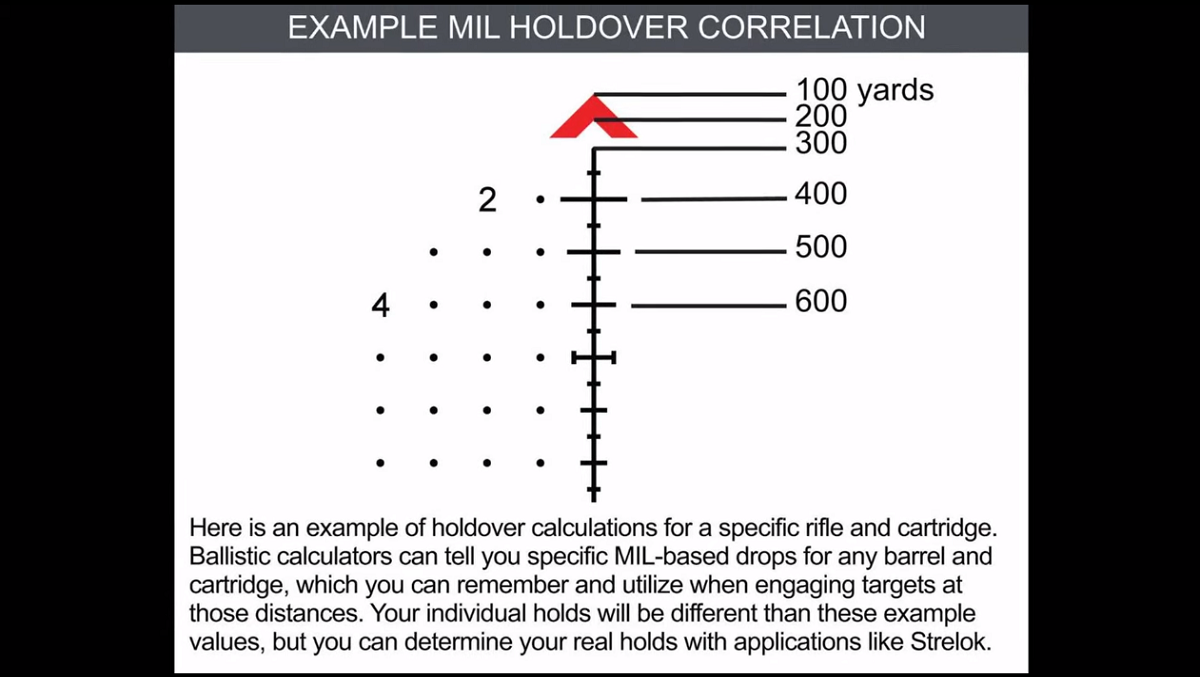
Generally speaking, with this reticle, the way I was using it, was I was basically, at extended distances I would dial a little bit and then use the mil grid underneath of the Chevron, usually because at extended distances, say like 600 yards, the Chevron would cover up most of the target, so say if I shot center mass on the steel so I could see the bottom or the top half of the steel because I put the tip of the Chevron in the center, if I impacted low left or low right I wouldn’t be able to see that impact because the Chevron itself was covering it up, so usually at extended distances, again, you don’t have to do it this way, but that is how I chose to run it, usually at extended distances what I would do is use the mil grid itself because it’s a lot crisper, it’ a lot cleaner, it’s a lot easier to spot your misses because, of course, you have that center Chevron covering up a good bit of your target and the surrounding area as well at extended distances.
Overall, you do have an excellent feature set within the optic and reticle. It’s not gonna be ideal for everyone in everyone’s situation, this is not what I consider to be a long-range optic, again, if you’re looking for extended distances, maybe say between 6 and 1200 yards, then there are definitely higher magnification scopes that I would recommend over the 2.5-10.
This is the scope that really excels, at least for me, in that sort of 100 to 600-yard range where it is a good blend of speed, precision, all of the ranging features you could ever want and then it also has that mil grid, which I do prefer as a more precision based or more sort of DMR based optic, something that allows me to make quick follow-up shots and adjustments on the fly without having to do too much work and I can kind of use the reticle to my advantage.
When it comes to actually using the optic, it has a good glass, it has a really good reticle and, so, again, inside of that 4, 5, 600 yards it was incredibly easy to make repeat shots over and over again, even though I am not a very experienced shooter at those extended distances, again, 600 yards is about the furthest that I’ve ever shot, and this optic performed quite well even in the hands of a novice like me at those, again, extended distances, at least for me. For a better shooter I’m sure it will perform better as better shooters tend to make everything that they use much better.
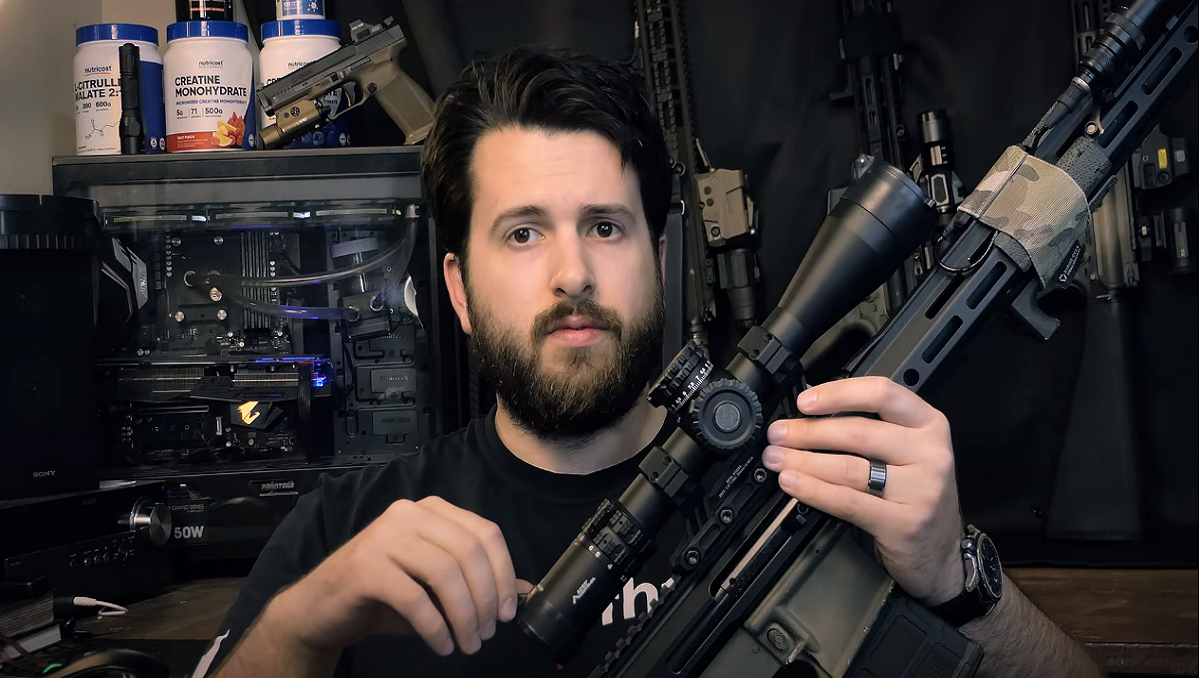
I should also note that the optic mount that we’re using is the Primary Arms PLX scope mount, it is their brand new, made in the USA scope mount, it is very high quality and it is also 300 dollars, which is horrifically overpriced, please don’t buy it, it is way overpriced for what it is. It is a very nice scope mount, but there are nicer scope mounts for less money with nicer features, so while it is a very nice scope mount and I’m grateful that they sent it out to me, I don’t recommend that you buy because it is very, very overpriced, again, I think it’s like 300 bucks for a very standard 30 millimeter scope mount and, yeah, there’s not really anything special about it.