
See more results
for LWRC IC DI on Wikiarms.com
The AR Evolved - LWRC IC-DI 16-inch
Updated
41 months ago
Good morning, everyone, this is John, and today we're going to be taking a look at a very cool upper receiver, this is from LWRC, this is their IC-DI 16-inch upper receiver.
Full disclosure on the LWRC IC-DI 16-inch upper receiver is that I have no relationship with the company whatsoever, I actually acquired this upper receiver in a trade, so I didn't pay for it, but I did get it in a trade, so no relationship with the company, no money changing hands, nothing like that.
Wikiarms.com Search Engine Results
Want to see your products here? Click this
link.
 Powered by Wikiarms.com
Getting into the specifics of the LWRC IC-DI, which is not necessarily the longest name out there, but this is their DI, so direct impingement individual carbine upper receiver, individual something upper receiver, I forget what the IC stands for. As you can probably tell this is the 16.1-inch rifle version, and we might as well start with the tip and work our way back.
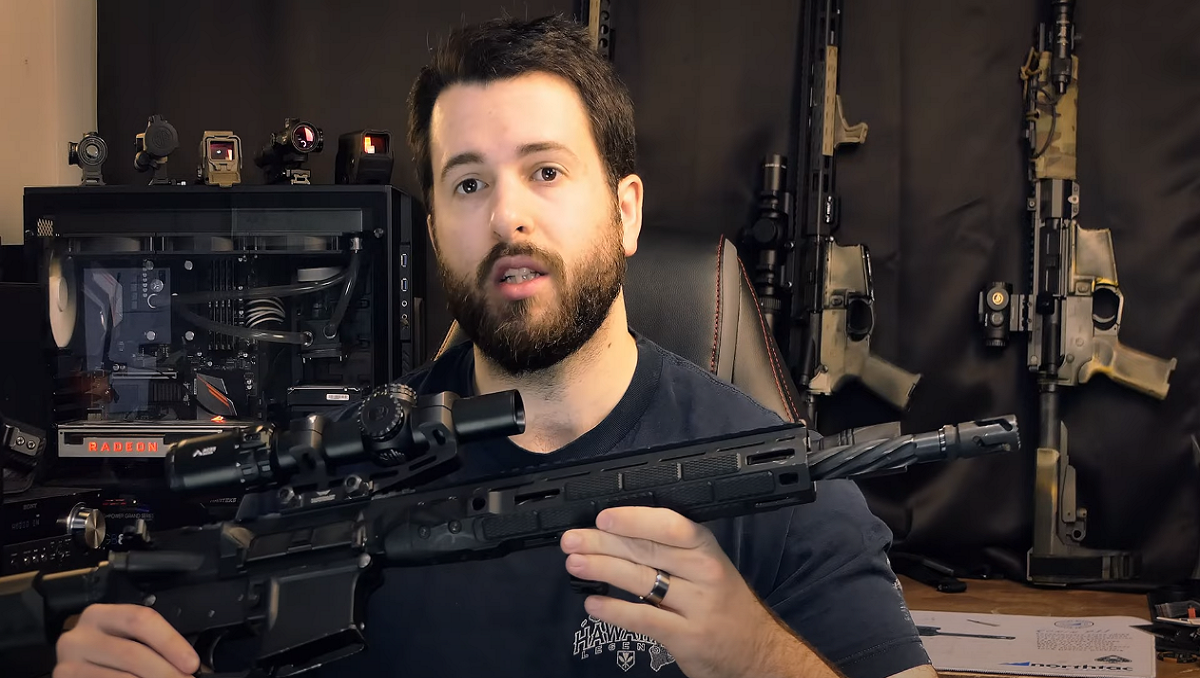
Starting out, we do have a spiral flash hider that is very A2-esque in terms of its size and flash reduction, it does a really good job of flash reduction, doesn't really do anything in the way of recoiled mitigation, but it does do a really good job of reducing flash while being a very small compact muzzle device and has no pinging sound like a three-prong would.
Moving back from there to one of the most interesting components on the build, this is the the16.1-inch cold hammer-forged, Nicor-treated, spiral-fluted barrel. As far as the barrel goes, it is a very, very high quality barrel, their Nicor finish, which I'm not sure if that is proprietary to them, it is just a very hard lubricious finish, gonna be maybe a little bit better than Nitride in some regards, but it's kind of their nice flashy finish, it looks really good, it works really good as well.
The spiral-fluting also, the machining work that goes into the barrel is very nice. I personally am not the biggest fan off fluted barrels, usually what they do is they start with a bit of a heavier barrel and then they machine it down to a bit of a lighter barrel with these big aggressive flutes. Personally, in terms of weight and cost efficiency, you should probably just start somewhere in the middle and then ditch the flutes. It does look nice, it will add some surface area for theoretically enhanced cooling, it will be slightly more rigid than a thinner-profile barrel, however, it's not going to be more rigid than a thicker-profile barrel, because you can't remove material and make it stronger, but in terms of size and weight efficiency, the spiral flutes do a good job while increasing surface area. There are some benefits, but from a pure cost aspect, it's better just to start with like a nice middleweight profile barrel. The barrel itself is chambered in 5.56 with a 1:7 right hand twist, all perfectly fine there.

Moving on to the gas block, the gas block is a pinned gas block, which I very much so like to see, basically means that that will never move no matter what happens to the gun, and it is also Nicor-treated, which is the same finish as the barrel. Gas tube, same story, it is also Nicor-treated, basically everything that is steel on the gun is going to be Nicor-treated, which is very nice corrosion resistant, heat resistant finish.
Getting into the handguard and the upper receiver, which is what's going to separate this from just about every other upper on the market, it's going to be LWRC's monoforged upper receiver, so you might be able to tell the upper receiver sticks out about an inch, inch and a half, from where a standard AR-15 upper receiver would. What that does is that allows you to get more solid Picatinny rail before the handguard, so you could in theory mount stuff a little bit further forward without having to worry about rail shift, but that also has a couple other benefits as well. First off it actually does, I believe in this system, make it a truly free-floated system, so there's less pressure on the barrel nut itself, so like on AR-15s they're all technically to release if they have a free float handguard are a little bit unfree-floated because the handguard is touching the barrel nut, that's touching the barrel, so there's like a little bit of deflection that can happen, though it's very minimal. This further reduces that to almost nothing.
On top of that, the way that the handguard attaches to the barrel nut and the upper receiver is it has 10 tapered steel bolts that go from the handguard into the barrel nut, so it is an extremely secure lockup, there is no possibility of rotation whatsoever, so it's not like it has anti-rotation tabs, but it is completely locked down to the barrel nut. On top of that, it has a much more contact with the upper receiver because the upper receiver actually has a lot more material here in the front, so it is actually going to be quite a bit stronger than your standard mil-spec AR upper as well, so that does remove a couple weak points from the standard, I don't want to really say weak points, but theoretical weak points from an AR-15 upper receiver, makes them quite a bit stronger, the rail lockup is basically perfect.
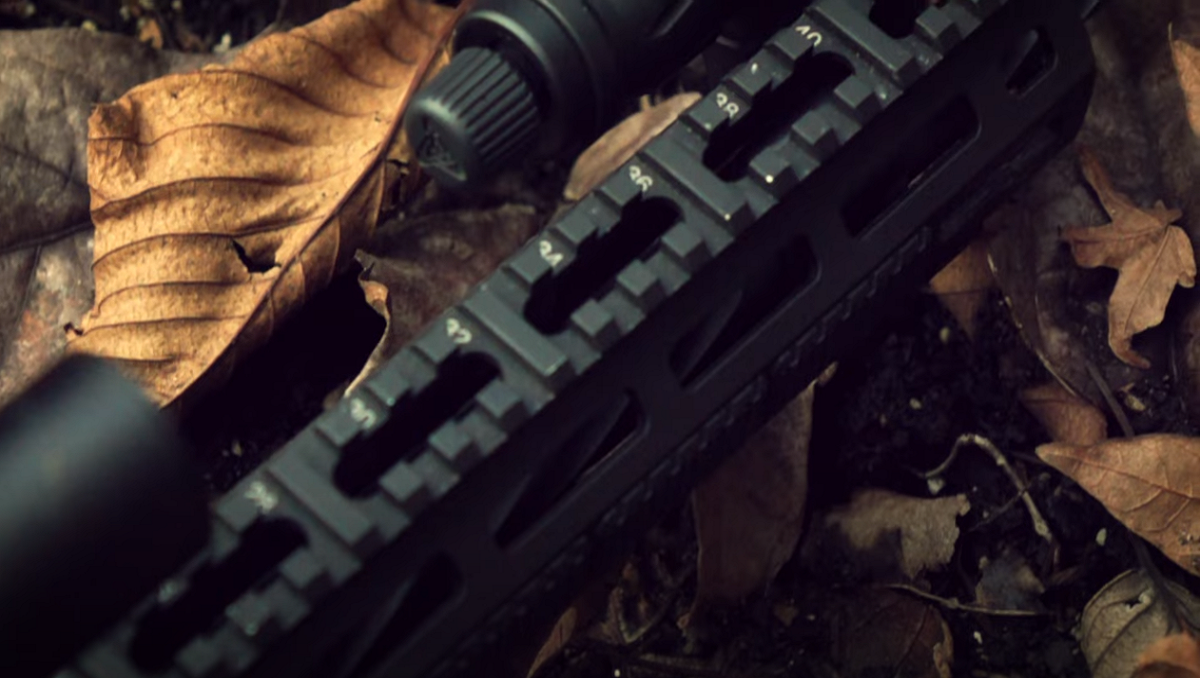
Getting into the rail itself, this is the M-LOK version, so they have a proprietary version and then an M-LOK version, the M-LOK version is probably going to be preferable for most people. You have a, in this case, 10.1-inch M-LOK rail. That sounds really short, it's like 10.1 or 11 inches, but because the upper receiver starts an inch forward it actually pushes out the rail. At some point just a preference thing for me, I might swap out the barrel to like a 13.9 or a 14.5 pin and weld, so that moves that back a little bit, it's a little shorter, a little handier, that sort of thing, that's kind of just an aesthetic preference thing for me personally, though they do also sell extended rails if you do want a 14-inch rail, 13-inch rail, so that it covers up more of the barrel, that's going to be more of an aesthetics preference thing.
Back to the handguard itself, it is a seven-sided M-LOK, which is preferred, you get a lot of mounting options for basically anything that you want, on top of that, the top Picatinny rail is nicely scalloped out with lightning cut, so it does remove a lot of the material from the top as well, meaning that it's very light and very ventilated. On top of that, the very, very nice lockup that you get to the barrel nut and the upper receiver means that the rail is going to be rock solid if you do want to put on packs, laser aiming modules, so on and so forth.
Last thing that we need to talk about on the rail is it does have integrated QDs on the left, right and bottom of the handguard for attaching slings, which I do prefer them. They are very nicely reinforced, on top of that, they are also anti-rotation, which I know is a big deal for some people, so it is nice to see.
On the upper receiver, this is their mono forged upper receiver, so it is a 7075 forged upper receiver, it's not Billet like you'll see on some of the other proprietary uppers out there, this is an actual forged upper receiver which is going to be quite a bit stronger in true 7075, which is very nice to see.
Other than the cool stuff going on in the front part of the upper receiver the back part of the upper receiver is very standard, so you have a slightly different lockup on your dust cover, you have a slightly different angle on your shell deflector, but other than that it's all fairly standard in the back section of the upper receiver.
Moving on to the charging handle, they have a very nice ambidextrous charging handle that works very well, so it is ambidextrous, it has levers on each side that do work quite well for charging from either side, so if you're a lefty or you just want to do like a press check and use your right hand to pull it back a little bit, very easy to do so, the charging handle itself is fairly beefy. It doesn't seem to have any sort of gas deflection abilities like for a suppressed shooting or anything like that, but as far as a charging handle goes it is very usable and very beefy looking, it has a very large steel roll pins everywhere, which is nice to see, it looks very strong, durable, that sort of stuff.
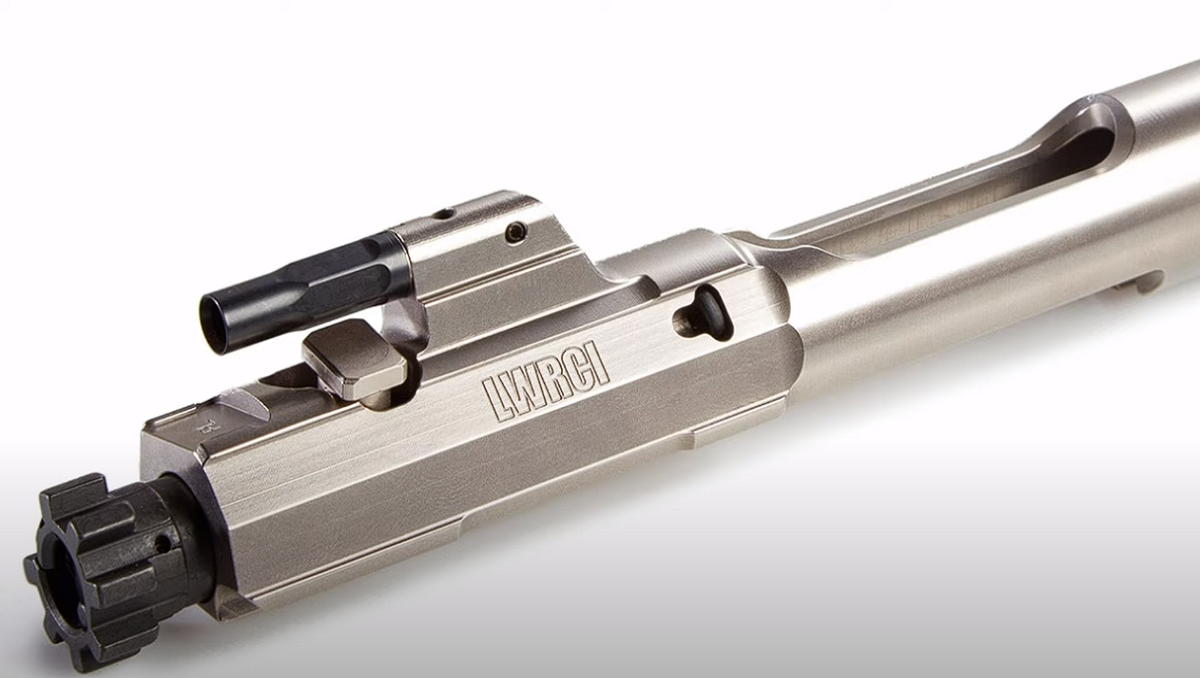
The one difference on this upper receiver versus their standard upper receiver is that the trade that I got did not come with their keyless BCG. However, I will roll in some photos and images of it so you guys get a good idea of what would come with a standard LWRC IC-DI 16-inch upper receiver. So, most of the BCG is going to be your fairly standard affair, very high quality materials, very high quality coating, so on and so forth, but with their keyless BCG the key is actually one piece with the bolt carrier itself, meaning that that potential failure point on an AR-15, which I have actually had two gas keys fail on AR-15s, I had one screw shear off and I've had one just come loose over time. Having that key completely integrated with the carrier does eliminate that potential issue, not necessarily that it happens all the time or it's a glaring weak point on an AR-15, but it does remove another potential failure point on an AR-15.
Now that we've gone over all of the individual components, now we can talk about the shootability, the reliability, and the accuracy. When it comes to shootability most of that is going to be determined off of the barrel and the gas port size, the gas port size on this rifle, I haven't specifically checked, but it is a little bit larger than it needs to be, I would estimate it somewhere in the .080 range, it is a little bit over-gassed. I know some people get upset when I say that and they say ‘Oh, well, it's combat-gassed or is gassed for harsh conditions’, and that's fine if that is your reasoning, I'm just here to report that it is a little bit over-gassed in terms of like perfect three o'clock ejection.
Currently we have a H3 buffer in the back, and with decent ammunition it's ejecting at around 2.30-ish, with a little bit weaker ammunition it is ejecting around three o'clock.
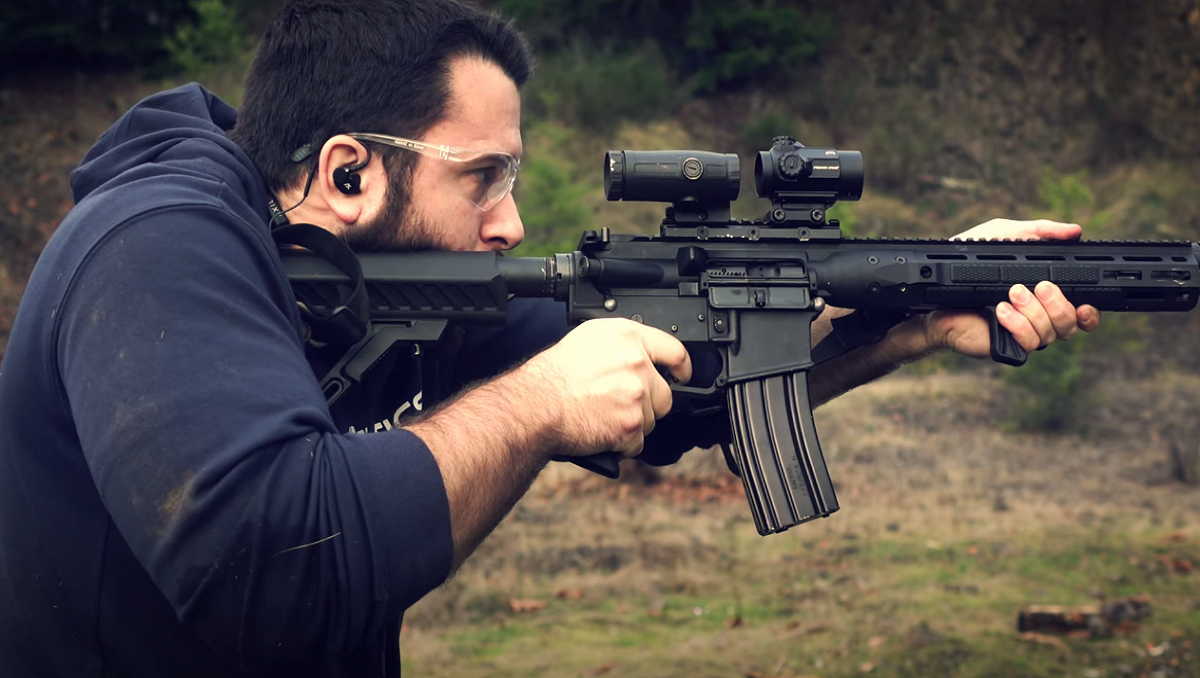
LWRC ships these with an H2 buffer, which is a very good buffer weight, I prefer a little bit softer-shooting guns in general. So, while it is definitely a very shootable gun and a very easy gun to use, it's smooth enough, it does have a little bit more recoil than some other guns on the market, some other uppers on the market, so if you're looking for the softest upper on the market this is not that, this is definitely a step above in terms of recoil impulse just because it is a little bit overdriven, maybe like 10% more gas than it really needs to cycle, and if you're fine with that, because you want utmost the reliability, then that is perfectly fine. I'm just here to report that it is going to be a little bit harsher than some other guns on the market, still very smooth, the barrel works very well in conjunction with the muzzle device, in conjunction with a fairly lightweight AR-15, it is still very shootable, very easy to get on target, make a very quick follow-up shots should you need, just not quite at that cutting-edge competition style rifle that some other guns are going to bring to the table.
Getting into reliability, it was boringly 100% reliable through at this point, probably about 1200 rounds without cleaning or lubricating, so reliability, perfect, no issues there whatsoever.
When we get into accuracy, accuracy was also very good, something that I was very, very happy with. With military ball ammunition, I believe we tested M193, M855 as well as some 77 grain HSM and some 75 grain Nosler, I could be wrong about that, but we'll go ahead and start rolling that in now. Basically, with the military ball style of ammunition we were getting about 2 MOA and with the match loadings we were getting much closer to 1 MOA, which is exactly what I would like to see out of any AR-15, especially a nice high-end AR like this.
Wikiarms.com Search Engine Results
Want to see your products here? Click this
link.
 Powered by Wikiarms.com
Wikiarms.com Search Engine Results
Want to see your products here? Click this
link.
Powered by Wikiarms.com
The 16.1-inch cold hammer-forged barrel that they include does have a ton of machining done to it, it's still not what I would consider a lightweight barrel, it's still definitely a middle weight profile because they definitely are starting with a much thicker barrel and then doing a lot of machining to cut a lot of that weight out.
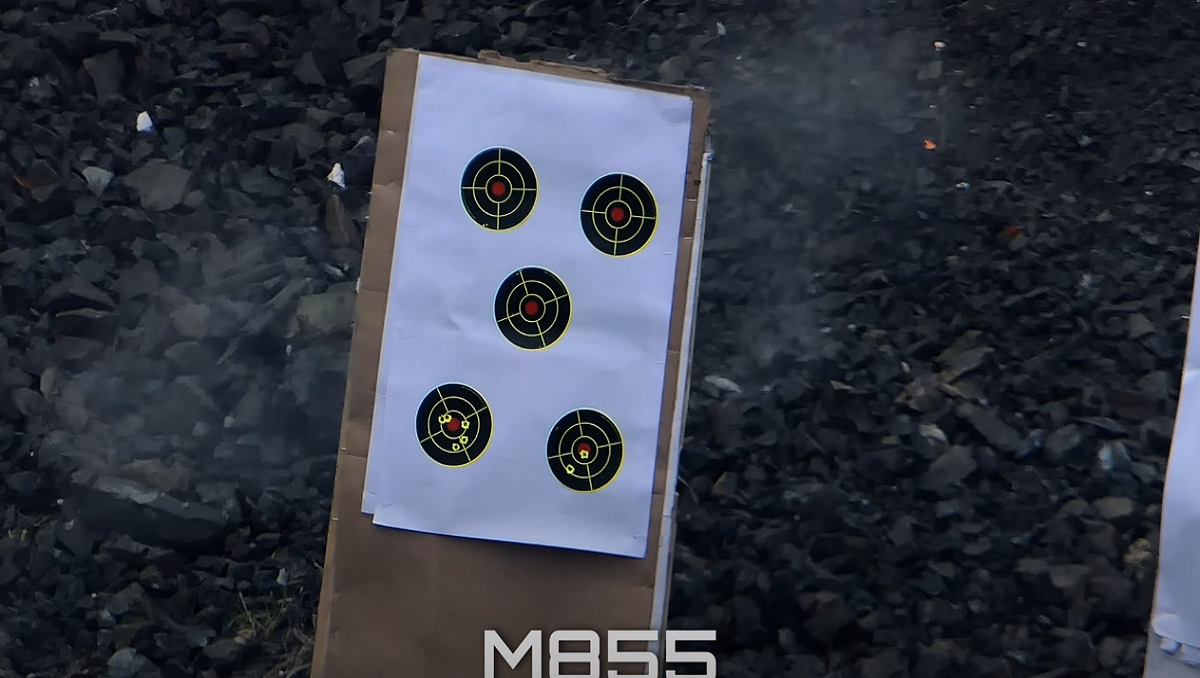
At the end of the day, it's performance in terms of accuracy is still very good, I'm seeing very good, consistent accuracy over a wide variety of loads, and this upper receiver we have taken out to 600 plus yards with that issue, which isn't necessarily the top end of what an AR-15 and 5.56 can do, but it is certainly pushing towards my personal limits with cartridge.
The barrel, in terms of accuracy, does not hold me back in any way, and is what I would consider acceptable to very good in terms of standard AR-15 accuracy. The shootability is still very good, I would recommend a heavier buffer, H2, H3, somewhere in that regard, and if you are a total recoil snob maybe throwing in a heavier spring as well, but besides that that's really going to be one of my only two complaints with this upper receiver is that it is slightly more over-gassed than upper receivers in this price category, and that it is expensive, it is going to be around a thousand dollars for just the upper receiver, if you can find it, if you want the entire LWRC package which does come with a very nice completely ambidextrous little receiver with an ambidextrous magazine catch, an ambidextrous slide stop, slide release or bolt catch, bolts release in this case. Very nice low receiver you're looking at about 1700 dollars, so it is competing with Gaissele, Daniel Defense, not quite in that CAC LMT range in terms of price.
Wikiarms.com Search Engine Results
Want to see your products here? Click this
link.
See more results
for Geissele on Wikiarms.com
Powered by Wikiarms.com
Wikiarms.com Search Engine Results
Want to see your products here? Click this
link.
See more results
for Daniel Defense Low Receiver on Wikiarms.com
Powered by Wikiarms.com
Their piston stuff is definitely competing with those higher-end brands, but the DI versions are still expensive, but they're definitely towards, I don't want to say mid-range because1700 is not mid-range, it is not towards the top of the stack, but it is definitely in that upper echelon discussion.
So far the performance aspect of it, the only thing I have a very minor gripe with is that it is a little bit over-gassed, fortunately you can fix that by using heavier buffers and springs. Really the only time I'd have a problem with how this upper receiver is gassed is if I was using it with a suppressor that had a lot of blowback, you would definitely be getting a lot of gas back in the face and that would be kind of annoying, especially when you're spending close to two thousand dollars on the full rifle and then about a thousand dollars for the upper receiver. Fortunately, for unsuppressed shooting it is definitely fixable, though still not perfect or close to perfect like we might see on some other uppers.
Overall, I am a very big fan of the design of the upper receiver, I really, really like the handguard and the upper receiver as well. I like the BCG that I unfortunately don't have with it, I probably will pick up the BCG to throw in here so that it has the proper BCG for this upper receiver. The barrel I might switch out at some point, I do recognize that the barrel is very accurate, but I might actually throw in a Ballistic Advantage 13-9” Hanson, so that the barrel is pushed back a little bit, it's a little handier, pin weld for a suppressor mount of some sort.
Overall, a very few nitpicky complaints about the upper receiver in general, I would recommend it to anyone looking for this sort of package in this price range. If you think the feature set is something that you need, you're a fan of the barrel, the handguard, upper receiver, those are going to be probably the main selling points, especially if you're going to be using it for night vision or you just need an ultra-solid rail lockup, and you're a fan of the overall design, and you're in that price category to begin with, I think this is a very, very good option to look at.